NEWS

Researchers at Nottingham Trent University (NTU) are investigating how indoor plants may improve the health and wellbeing of office workers.

A team of biophilia experts have developed a ‘green’ office with more than 20 plants and a green wall in order to monitor whether, and in what ways, people working among greenery develop improved health.

Participants will have their heart rate and blood pressure monitored while working in the green office, and this will be compared to their measurements while working in a separate office space which features no plants.

The project is led by Professor Emeritus Derek Clements-Croome, who is also a visiting professor at NTU from University of Reading, with Dr Yangang Xing, an associate professor at NTU, and Dr Tatsuya Matsuoka, a visiting scholar at NTU from Shimizu, Japan.

Dr Matsuoka said: “While it’s commonly believed that being surrounded by nature is good for your health and wellbeing, we’re keen to design a methodology which can prove whether or not this is the case in an office environment.

“When you consider how many people work in offices around the world – whether onsite or from a home office – the implications for people’s wellbeing could be considerable.

“And with increasing interest in healthier work environments, our findings could help shape how offices of the future are designed and maintained for long-term health benefits.”

The study is taking place until December this year and will result in published research which will be open for the public to read free of charge.

The chosen plants are selected based on related research carried out by the North American Space Agency (NASA) for their air-filtering abilities, primarily for their capacity to remove volatile organic compounds (VOCs).

They include tall plants such as the kentia palm, barrier plants like the sansevieria, as well as snake plants, monsteras, the Dracaena Janet Craig and more.

A series of short tests of 30 minutes per participant will take place this summer before 24 hour tests will take place later in the year for a more detailed analysis.

Participants will wear Google Fitbit 6s to monitor their blood pressure and heart rate and be asked a series of questions about their experience of working in both environments.

Their wellbeing outside of the office, including quality of sleep, will also be monitored as part of the later study.

Dr Matsuoka is working at NTU for a period of 12 months before he returns to the Institute of Technology at Shimizu Corporation in Japan.

The plant scaping was done in collaboration with the Benholm Group, a company in Falkirk which specialises in interior plant scaping to support biophilic design.

Research supervisor Professor Clements-Croome said: “We are connected to nature and it affects us deeply in many ways physically and mentally. At a fundamental level, nature makes an impact on the brain and hence decision-making.”

Research supervisor Dr Yangang Xing, of NTU’s School of Architecture, Design and the Built Environment, said: “Biophilic design may not only support employee wellbeing but could also enhance productivity and job satisfaction over time.

“We hope that this study will pave the way for further international collaborative research into optimising inclusive biophilic design and will inform better designed work places to support human health, well-being, and contribute to one-planet health over time.”

Cardiff Met Tops Employability Rankings in Wales for Another Year

Cardiff Metropolitan University has been ranked as the top university in Wales for employability once again.

The latest Graduate Outcomes survey, released today, shows 94.4 per cent of Cardiff Met graduates are in some form of work or further study 15 months after graduating.

This places Cardiff Met first in Wales, ahead of Swansea University with 94.1 per cent and Cardiff University with 93.6 per cent. Cardiff Met also topped the Graduate Outcomes survey results in 2024.

The Graduate Outcomes survey is an annual survey sent to all Higher Education leavers in the UK 15 months after they finish their studies. Owned and operated by HESA, the Higher Education Statistics Agency, it’s the UK’s biggest annual social survey and captures the perspectives and current status of recent graduates.

Professor Julia Longville, Dean of Teaching and Learning at Cardiff Metropolitan University, said: “These are really pleasing results for Cardiff Met. It’s fantastic to see so many of our students, 74.8% in total, progressing into graduate level employment or further study which is an increase compared to last year despite a challenging labour market.

“As we are celebrating graduation this week, watching our students cross the stage, knowing that many of them are heading into fulfilling careers, it is incredibly rewarding. These results truly reflect the hard work of our students and staff, and it’s great to see it all pay off.”

61% of Cardiff Met graduates also remain in Wales to work, and the vast majority of these are in the Cardiff Capital Region, demonstrating the positive impact the University’s graduates have on the local economy. Outside Wales, Bristol and London are the next most popular destinations for Cardiff Met graduates to find employment.

More information on the Graduate Outcome Survey is available on the Cardiff Met webpage.

Welsh Entrepreneur who overcame adversity awarded Honorary Fellowship

Originally from Newport, Matt left school at 14 without any GCSEs and found himself living in a bedsit funded by social services.

However, it was during a daily walk to the YMCA – while unemployed at the age of 16 – when Matt saw an Army recruitment advertisement that inspired him to enlist, marking a pivotal turning point in his life.

Matt, 43, is now Founder and CEO of Rebel Lion Advertising and Marketing, based in Cardiff with offices in London, Manchester and New York City. The company works with high profile clients including the Football Association of Wales, Britvic, London Palladium and Marshall Arts Entertainment. Red Lion achieved a seven figure turnover in year two.

Having held senior positions in the UK advertising industry, Matt founded his first creative advertising agency, S3 Advertising, in 2011, which he grew into a multimillion pound national business that was later sold through a management buyout.

Matt has highlighted how the pivotal Army recruitment advert showed him first-hand the impact communications can have and how it was his inspiration to go into advertising.

On receiving the Honorary Fellowship from Cardiff Metropolitan University, Matt said: “To be honoured by Cardiff Met in this way means more than I can explain. I didn’t finish school. I didn’t go to university. I came from care, joined the Army, and built my life through resilience, mistakes and discipline.

“This Fellowship isn’t just for me, it’s for every young person who’s been told they won’t make it. You don’t need a perfect past to build a powerful future. You just have to keep showing up.”

In 2021, Matt’s entrepreneurial flair also saw him appear on the BBC’s Dragons’ Den, where he secured investment for and raised the profile of his skincare brand, MESOA. His appearance on the show also gave him the opportunity to discuss male mental health, having struggled himself over the years.

In his first business, S3, Matt launched the S3 Academy which partnered with Welsh universities to give students work experience and develop their skills in a real-world setting. Around 300 graduates went through the academy over four years, with more than 10% of these securing permanent jobs with his company. So far, Matt has employed over 100 people in Wales, 50% of these originally started at his academies.

During the graduation ceremony at Wales Millennium Centre, Matt gave an inspirational speech to students from the School of Management: “As I stand in front of you today, not as someone who had it easy, but as someone who earned this moment, I say this to every graduate. You are enough. You are ready. No one gets to define your limits but you. There is no perfect route. There is only the route you build. Lead with your heart. Lead with your fire. Don’t wait to be chosen. Choose yourself. And whatever stands in your way, face it.”

Matt has won multiple national awards, including the prestigious Great British Entrepreneur of the Year Award for the Creative Industry in 2017, 2018 and 2019 plus industry awards issued by The Drum and the RAR Digital Awards.

Professor David Brooksbank, Senior Dean of Cardiff School of Management said: ”Having faced a challenging start in life, Matt exemplifies what can be achieved through hard work and dedication. He has made a significant impact on the Welsh business community, building an outstanding commercial track record as a serial entrepreneur leading multimillion pound organisations.

“Matt is deeply passionate about developing people and inspiring younger generations to thrive, regardless of their background. It is a great honour to present Matt with an Honorary Fellowship, and we look forward to working with him in the future.”

Alongside his business success, Matt has been awarded industry fellowships with the Chartered Institute of Marketing (CIM) and the Royal Society of Arts, Manufactures and Commerce (RSA). He has also been accepted into The Chartered Management Institute (CMI) as a Chartered Companion.

Now living with his family in the Vale of Glamorgan, Matt enjoys supporting causes which align with his values; including a year volunteering for the Welsh Amateur Boxing Association as Director of Communications and a partnership between his brand, MESOA Skincare and Brotectors, helping to break the stigma around men’s mental health.

Cardiff Met’s Class of 2025 celebrates graduation at the Wales Millennium Centre

This week, students from Cardiff Metropolitan University will graduate at the Wales Millennium Centre. 

Over 3,200 students from more than 90 countries will attend the July graduation ceremonies which take place from Monday 14 July to Thursday 17 July. 

Professor Rachael Langford, Cardiff Met’s Vice-Chancellor and President, said: “Graduation week is a standout moment in our University calendar – a special time to celebrate the achievements of our students. It’s a chance for us to warmly welcome graduates, along with their families, friends and supporters who have been by their side throughout their academic journey. 

“On behalf of the entire University community, we extend our heartfelt congratulations to everyone graduating this week. Your success is the result of years of dedication and perseverance, and we are extremely proud. As you step into this exciting new chapter, we wish you every success and look forward to welcoming you into the Cardiff Met alumni family.” 

Cardiff Met’s July graduation ceremonies see undergraduate and postgraduate students from the UK and overseas, and from all five academic Schools (School of Art & Design, School of Education & Social Policy, School of Management, School of Sport & Health Sciences, and the School of Technologies) graduate with degrees and awards from the University’s 299 undergraduate and postgraduate programmes of study. 

Graduation warm weather advice

The warm weather is set to continue into next week and will coincide with Cardiff Metropolitan University graduation ceremonies being held at the Wales Millenium Centre (WMC). The health and safety of our graduates, guests and staff is our highest priority.

The WMC is air-conditioned, has ample seating areas, and drinking water is readily available for graduates, guests and staff. First aiders will be available as necessary.

Keeping cool if you’re attending graduation ceremonies

  • Dress for the hot weather and consider light, loose fabrics that will help keep you cool.
  • Try to keep out of direct sun between 11am and 3pm and walk in the shade where possible.
  • Apply sunscreen regularly and bring a wide-brimmed hat or umbrella and a handheld fan if you have one.
  • Whilst there is water at the venue, there may be queues, and we encourage you to bring plenty of water with you to stay hydrated throughout the day.
  • Consider your travel and parking arrangements in advance.

Further information on keeping safe in extreme heat is included on the Public Health Wales website.

If you are clinically vulnerable, feeling unwell or need additional support, please make yourself known to a member of staff at the information desk on arrival.

Travel disruption

There are no weather warnings currently in place and we do not anticipate weather-related disruption to travel. We will keep this under review.

Further information and advice

School pupils from across South Wales showcase artwork at Cardiff Met

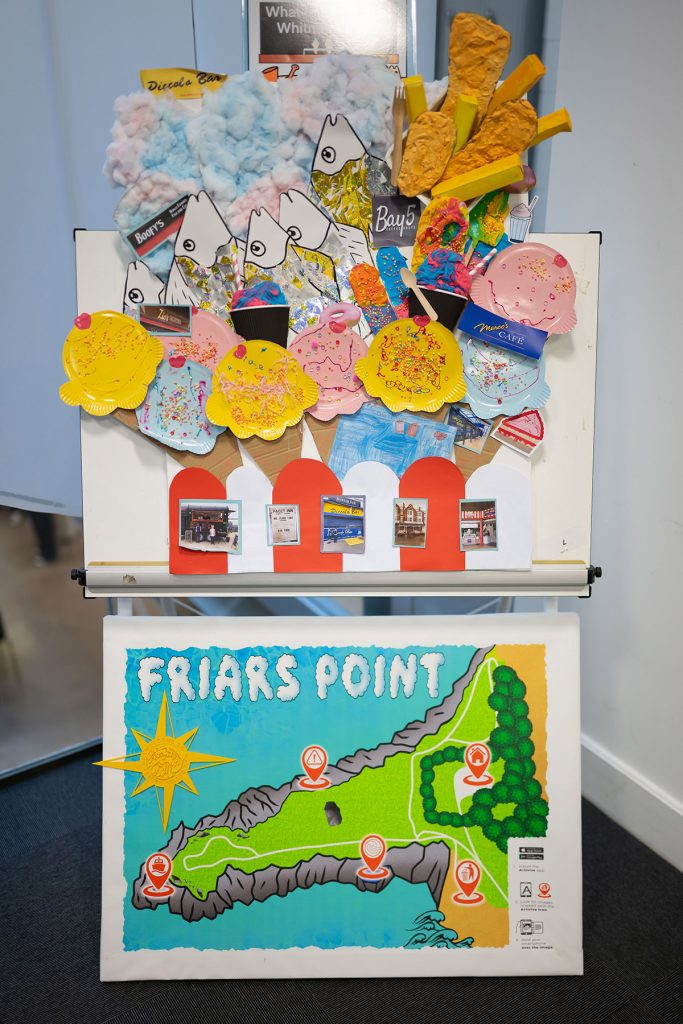
Hundreds of pupils from schools across south Wales will have their artwork on display at Cardiff Metropolitan University this week.

Now in its eighth year, over 60 schools – including school children from year one through to sixth form students – are taking part in the annual Creative Exhibition which takes place at Cardiff Met until 4 July.

Cardiff School of Art & Design and Cardiff School of Education & Social Policy work collaboratively to provide a platform for schools to share work with each other, parents and the wider public in a purpose-built exhibition space.

Marie Hill, leader of learning in art at Whitmore High School, in Barry, said: “The school’s exhibition is an excellent experience for art-based students as it validates and celebrates their hard work but also their imagination and creativity. There is nothing better than seeing your work on display and being able to see all the other schools’ work is amazing too. “Hosting it at Cardiff Met makes the students feel valued, whilst giving them a taste of what university life is like. As a teacher I feel inspired by the breadth of what is displayed.”

The Creative Exhibition is held in Cardiff School of Art & Design, Llandaff . It is open to the public from Friday 27 June and will run until Friday 4 July between 10am – 5pm Monday to Friday. The public are welcome to pop in and do not need to book in advance.

Jason Davies is a Senior Lecturer in Education at Cardiff School of Education & Social Policy at Cardiff Met, and responsible for the Creative Exhibition initiative. He said: “Every year it is a huge privilege to be able to work with colleagues in schools and colleges to share the incredible work pupils produce. Without the commitment and enthusiasm of teachers none of this would be possible. Thank you to everyone involved.”

Expert blog: What the Caster Semenya Judgment could mean for gender policy in sport

We are at the centre of a sex and gender storm. Conceptual definitions of sex are having significant practical implications on rights and access to services for gender diverse groups, with a targeted focus on trans people.

In the UK, the UK Supreme Court Ruling on the definition of sex in the Equality Act 2010 in May 2025 has caused shock waves for gender rights and major disruption to single sex spaces. The implications for sport remain uncertain with public consultation taking place to understand what this Ruling means in practice.

While in the USA, the new Trump administration has pushed down on gender identity and removed protections for trans people, including an executive order that prevents trans females from competing in female categories of sports signed by President Trump.

These legal hammers in the UK and the USA are influencing sports bodies to tighten gender eligibility policies and confine the female categories to birth sex, with a general trend towards the exclusion of trans female athletes.

Views continue to differ on the correlation between binary sex categories, the effects of testosterone on sport performance, physiological advantage, safety, injury risk and gender diversity.

Against this background, on 10 July 2025 the Grand Chamber of the European Court of Human Rights (ECtHR) will finally deliver its Judgment in the case of Semenya vs Switzerland.

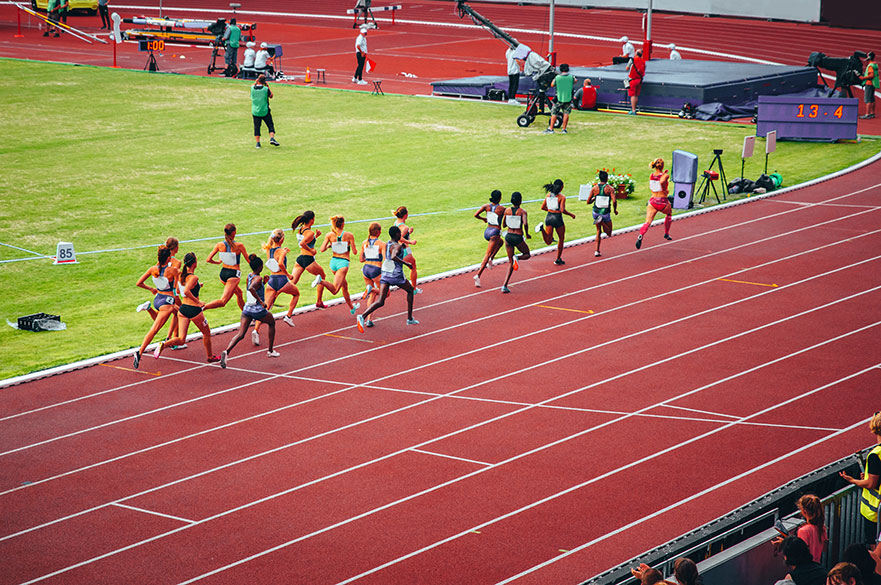
Caster Semenya is a world class South African runner who was restricted from competing in athletics by the World Athletics (WA) Eligibility Regulations 2018, which place medical conditions upon females with differences of sexual development (DSD), to participate in the female category.

Semenya challenged the eligibility requirement to undergo hormone treatment to lower her naturally elevated testosterone levels connected to her DSD identity, on the grounds that the rules constituted birth, sex and gender discrimination. WA defends the DSD regulations as necessary, reasonable and proportionate to maintain fair competition in the female category.

Semenya was unsuccessful before the Court of Arbitration for Sport (CAS) (in 2019) and the Swiss Federal Supreme Court (SFT) (in 2020). She fought her way to the European Court of Human Rights (ECtHR) and in 2023 it held by a majority that there had been a violation of European Convention of Human Rights (ECHR) Article 14 (prohibition of discrimination), taken together with Article 8 (respect to private life), and Article 13 (right to an effective remedy), taken together with Article 8 and Article 14 (prohibition of discrimination), by failing to secure safeguards in the review of Semenya’s case.

The Chamber highlighted that Semenya complained of the violation of her Convention rights to the CAS and the SFT but neither reviewed those matters sufficiently, owing to its limited powers.

In 2023, the Swiss Government requested a referral to the Grand Chamber, which was accepted by the Panel. The Grand Chamber hearing took place in May 2024 to assess the compatibility of the case with Convention rights, and the Judgment is imminent.

The ECHR is often celebrated as a living instrument that is interpreted in light of present-day conditions.  As outlined, those present-day conditions are turbulent and this outcome is likely to ignite further discussion about sex and gender in sport, with a risk of conflating DSD and trans athletes.

For example, since the Chamber Judgment in 2023, WA has imposed further restrictions on gender eligibility and in March 2025, it announced the re-introduction of a sex test to determine eligibility in the female category, in the form of a cheek swab gene test. It also recommended the merging of DSD and trans athlete policies which was warned against in the Chamber Judgment.

The eligibility of DSD athletes is somewhat overshadowed by the trans female debates but has nonetheless attracted athlete challenges for many years. The inclusion of both groups in the female sport category challenges binary categories and both are subject to similar scrutiny over testosterone, performance advantage, safety and injury risks.

When it comes to law and sport regulation there is an urgent need to identify areas of overlap as well as key distinctions between DSD and trans people.

The Grand Chamber Judgment will come at a time when gender eligibility is at its most contentious, and most politically charged. However, it might assist in encouraging dialogue and clarifying the legal and sport position for DSD athletes.

If the Grand Chamber confirms the Chamber Judgment it might have a significant influence on the future adoption of human rights in sport regulation and sport disciplinary processes. The compatibility of domestic law and sports rules with Convention rights might be subject to closer scrutiny following this Judgment.

Dr Seema Patel, Associate Professor in Law, Nottingham Law School

Expert blog: From fabric to field – the evolution of women’s football apparel

With the UEFA Women’s Euro 2025 getting underway next week, NTU’s Dr Katy Griggs takes a close look at how women’s football apparel has changed over the years – and why brands have a responsibility to continue to improve the kits they produce to empower the next generation of female players.

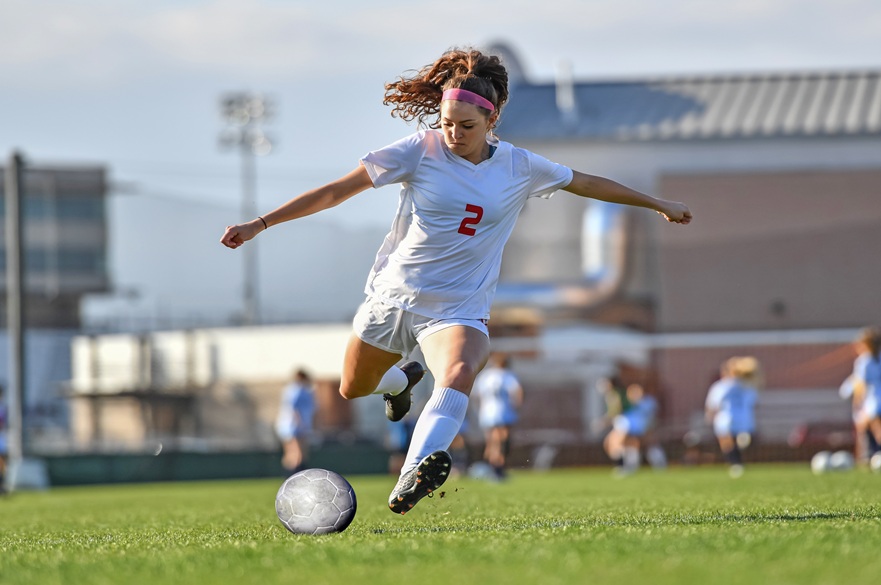
Over the last seven years, the number of women and girls’ football teams in England has more than doubled. As women’s football continues to surge in popularity and with the upcoming UEFA Women’s Euros in sight, what players wear on the pitch has become an important topic. Sportswear is more than merely aesthetics or branding, it enhances performance, comfort and identity.

For decades, however, female players had to wear kit designed and made for men.  

Except women aren’t small men.

Today, sports brands have finally switched their attention to producing garments that put females at the forefront of the design and cater for female needs.

Evolution of female sportswear: A brief history

Following the lifting of the FA’s ban on women playing on affiliated pitches in England in 1971, the growth of women’s football in the UK started to blossom. The skirts and bloomers worn by female football players in the 1920s and 1930s were replaced by shorts and jerseys resembling the men’s kit. But they were simply smaller versions of the men’s kit and hence were ill-fitting and not designed for the needs of the female players.

Players reported a fear of sweat marks and visible blood stains on shorts during menstruation when playing in light colours. With similar concerns raised by female athletes in other sports, such as tennis and rugby. This resulted in the England team and various club teams switching to darker coloured shorts.

It was not only colour that concerned players, but also the length and fit of the shorts, perceived by some to be exposing or sexualising them compared to their male counterparts.

It wasn’t until the FIFA 2019 Women’s World Cup that bespoke fitted women’s kits were available, designing kits with fit, performance and comfort in mind.

Optimising materials and female specific cuts were developed to support the athletic performance of the players.

Functionality meets innovation

Performance driven designs are now commonplace in sportswear, with technological developments in fabrics, design innovations and manufacturing processes supporting the growth of the sports apparel industry.

How a sporting garment performs is determined by a complex interaction between thermal, moisture and mechanical properties.

This results in sportswear garments that enhance breathability, performance, comfort, durability and aesthetics.

After scoring the winning goal for England in the Euro 2022 final, Chloe Kelly removed her shirt and sprinted across the pitch in her sports bra. An essential piece of sportswear for any female athlete, but unfortunately an item which is so often poorly fitted and misunderstood by the wearer, resulting in discomfort and pain.

Professional football players have been reported to experience a high prevalence and severity of breast pain, have average/below average breast/bra knowledge and wear the wrong size sports bra. Although no data currently exists on the breast support requirements for female football players, based on a 10km run with a stride length of 1m, an athlete would experience 10,000 breast bounces, reinforcing the importance of a correctly fitted and comfortable sports bra.

Implementing breast health education initiatives aims to improve players’ knowledge, reduce the amount and severity of breast pain and enhance their sporting performance.

Traditionally women wore male football boots to play, but due to anatomical differences of the foot, women often reported discomfort, poor fit and were at an increased injury risk as a result.

High rates of anterior cruciate ligament (ACL) injury are a hot topic in women’s football, with the incidence rate of ACL injury in women two times higher than their male counterparts.  

In recent years, major brands, such as Puma, Adidas and Nike have manufactured football boots tailored specifically to the size and shape of women’s feet and differences in traction for female players. However, their usage by grassroots to professional players is yet to be determined.

Research projects, such as ‘Project ACL’ hope to identify best practice and solutions to reduce the risk of ACL injuries in female football players, which may include identifying the impact of these female specific designs on ACL injury incidence rate in the coming years.

The Next 90 Minutes and Beyond

With the upcoming Euros and the impact this event will have on the growth of the game, kit innovation must also grow and be accessible for players at grassroots to the professional game.

Female sportswear should no longer be an afterthought or a smaller version of the men’s kit, but be female-centred and female-focused. Sports clothing brands have a responsibility to continue to improve the kit they produce to empower the next generation of female players to dream bigger, run faster and play harder.

New study highlights how older adults experience less muscle soreness after exercise

New research from Cardiff Metropolitan University and Lancaster University has revealed how older adults experience less muscle soreness after exercise compared to younger individuals – along with the health benefits of maintaining a fit and healthy lifestyle later in life.

In a recent article for The Conversation, Dr John Fernandes, Senior Lecturer in Sport and Exercise Science at Cardiff Met and Lawrence Hayes, Lecturer in Physiology from Lancaster University share the findings from a recent study…

Only 2% of people over the age of 70 strength train at least twice a week. This is worrying, as age-related muscle loss can increase risk of social isolation, falls, loss of independence and even early death.

There are many reasons why older people may avoid strength training, such as a lack of knowledge about exercise, lack of access to a gym and stigma. Another major reason is the fear that exercise might make their muscles and joints even more sore than they already are.

But the good news is that older adults are no more likely to experience muscle soreness after a workout than young adults are. In fact, our recent study found older adults actually experienced less muscle soreness following exercise than young adults did. This research overturns the widespread belief that ageing muscles are less resilient.

We pooled data from 36 studies which looked at a total of 389 younger adults and 390 older adults with the aim of comparing their experiences of exercise-induced muscle damage. We analysed three different types of studies in our research, including those where participants self-reported on their muscle soreness, studies which looked at markers of muscle damage in the blood, and studies which analysed muscle function the day after a workout.

We found that older adults do not experience greater muscle function loss after exercise compared with younger people. Maybe most importantly, muscle soreness was consistently lower in older adults after a workout. Older adults experienced only two-thirds of the soreness younger people did at 48 hours, and only one-third of the muscle soreness at 72 hours compared with younger people.

Because we looked at 36 different studies, not all of them compared the same age groups. But they generally compared younger adults (people in their 20s) to older adults (people aged between 30 and 60).

We also found that biological sex appeared to play a role in muscle function recovery, with males showing slightly greater losses in muscle function after exercise than females. This effect was true for both upper body and lower body exercises, as well as body strength and aerobic workouts.

These findings challenge the widespread belief that ageing muscles recover more slowly or are more prone to exercise-induced damage. This misconception often discourages older adults from engaging in regular physical activity due to fears of prolonged soreness or weakness. The findings also show us that older adults may not need longer recovery periods between workouts – potentially allowing for more frequent or intense training sessions, leading to better long-term health outcomes.

How to get started

Although our study shows that older adults are no more likely to experience muscle damage compared to younger adults, this doesn’t mean older people won’t experience some soreness when they start working out.

There are two important factors that can increase muscle damage (including soreness) after exercise.

The first is novelty. If you haven’t done a particular exercise before (or even for a long time) then it’s more likely you’ll feel sore for a couple of days afterwards if you overdo it. This happens because a new movement or type of exercise challenges our muscles. This causes the body to trigger a cascade of processes that build new muscle. While this temporarily makes us sore, it ultimately makes it easier for us to cope when we do that exercise again.

The second are “eccentric” muscle contractions. What we mean by eccentric contractions is when you’re attempting to slow down a weight (imagine the downwards phase of a bicep curl – your bicep is working to slow the bar from dropping to the floor). Another example of an eccentric muscle movement is downhill running.

Eccentric muscle contractions cause more damage than other movements mainly because they subject the muscle fibers to exceptionally high force loads, which is often distributed unevenly. This can overstretch and disrupt the integrity of our muscles, causing stress and damage. But while this leads to soreness in the short-term, these changes ultimately make us stronger.

To overcome the problem of being new to exercise, you should ease yourself into a new exercise programme. The couch to 5K programme is a great example of this. This programme guides people to build their aerobic fitness gradually.

So for instance, you might start by going for a 5-minute walk on Monday. If you feel okay on Wednesday, you might try a 10-minute walk instead. This means that every walk is only five additional minutes of novel exercise, allowing your body to gradually build fitness without too much risk of soreness.

The same principle applies to the eccentric exercises we might do while strength training. Start easy. For an older beginner, just standing up from a chair and returning to seated can be a starting point. This is a very useful movement as it uses our main leg muscles. Being able to raise from a chair is also a huge predictor of independence in later life. Another benefit of this exercise is that you can always return to the seat if you lose balance – so it is quite safe.

If you can do five of these in a row on Tuesday, see you if you can do two lots (we call these sets) of five on Thursday. Much like aerobic fitness, you’ll soon improve your muscle strength. For the upper body, raising light weights above your head and back down to your lap can be a start. You could also use tins of unopened beans if you don’t have any equipment at home. Try to do these strength-based activities at least two days per week.

The findings of our study and many others suggest exercise has no age limit. Move more to live longer and healthier. Aim for 150 minutes of activity each week, add strength training twice per week – and most importantly, find a workout you love. When you enjoy it, you’re more likely to stick with it.”

International venture builder project to train researchers in entrepreneurship

A £400,000 project led by the Centre for Business and Industry Transformation (CBIT) at Nottingham Business School aims to bridge the gap between academic research and industry by training technology transfer professionals and STEM researchers in entrepreneurship – with a focus on AI to empower businesses.

At the heart of the initiative is a “Train the Trainer” model developed by CBIT, which will prepare 40 staff from partner institutions to mentor researchers in commercialisation and innovation practice. Unlike traditional technology transfer offices, this approach is designed to build enduring local capacity for venture creation – equipping mentors to guide researchers beyond patents and licensing into real-world venture building. By embedding entrepreneurial expertise within institutions, the program fosters self-sustaining ecosystems of innovation.

These trained mentors will play a pivotal role in delivering the STEAM Founder Program, which will support 120 researchers from the UK and Thailand in aligning their work with the needs of industry and society. The program equips STEAM researchers (science, technology, engineering, arts and mathematics) with the practical tools to work across disciplines, engage with external stakeholders, and develop solutions with global relevance.

With funding from the British Council’s prestigious International Science Partnerships Fund and Thai Science Research and Innovation, it will be delivered as part of an established partnership with Chiang Mai University’s Science and Technology Park (STeP).

The program will focus on personal AI and health technology to address Thailand’s pressing socio-economic challenges and align with its national strategies. The country faces significant gaps in healthcare access, especially in rural areas, and is prioritising innovation-driven economic growth, particularly in the health and wellness sectors. The project also opens up access to new expertise, partnerships and global markets for UK researchers.

In addition to fostering interdisciplinary thinking, the program develops the commercial capabilities needed for international venture building. Participants will gain practical skills in opportunity assessment, sustainable business modelling, and market validation—preparing them to take research-driven products to market. With Thailand acting as a launchpad into Asian markets, and the UK serving as a gateway to Europe, the program positions researchers to grow globally connected ventures from day one.

Researchers will test early-stage products with a range of selective ventures from CBIT Venture Builder in the UK and Chiangmai Science Park in Thailand, , gaining experience in applying their ideas in real-world, international contexts.

The program will evolve into a formal course and will be supported by a new International Network of Entrepreneurial Interdisciplinary Champions (INEIC), which will build lasting partnerships and promote knowledge-sharing between the UK and Thailand. The network will connect researchers, entrepreneurs, and innovation professionals to collaborate on real-world

CBIT has a proven track record in developing scalable, market-ready solutions and a growing global reputation as a convener of interdisciplinary and cross-border partnerships.

Professor Xiao Ma, project lead and Director of CBIT, said: “UK researchers often work within single disciplines and focus on academic goals, which can create a disconnect between their work and real-world industry needs.

“This narrow approach limits the practical impact of their research and contributes to lower industry research income compared to countries like the US. The program addresses this by promoting interdisciplinary collaboration to better align research with real-world applications.”

Dr Phavika Mongkolkittaveepol, General Manager of STeP, which boasts a network of more than 2,700 researchers and will provide incubation platforms to support the commercial adoption of innovation, said: “The Train the Trainer model is critical for building national capacity that drives transformational economic growth. By equipping institutions with the ability to nurture entrepreneurial talent, the programme lays the groundwork for a more dynamic, innovation-led economy.

“Coupled with an emphasis on international venture building, it enables researchers to scale their ideas beyond local contexts and position Thailand and the UK as regional launchpads for global innovation.”

NBS is triple crown accredited by EQUIS, AACSB, and AMBA – globally recognised hallmarks of excellence and quality for business education. Its commitment to supporting businesses, fostering entrepreneurship, and driving economic growth has recently been recognised with reaccreditation from the Small Business Charter for the maximum five-year period.

For further information email cbit.vb@ntu.ac.uk