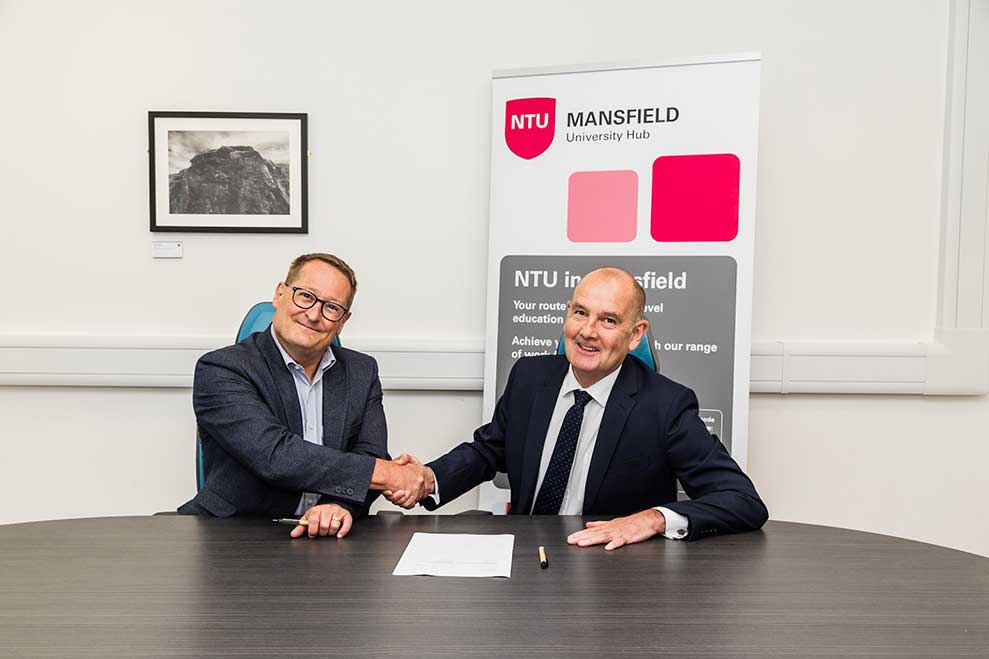
Nottingham Trent University (NTU) and Sherwood Forest Hospitals NHS Foundation Trust (SFHT) have signed a Memorandum of Understanding (MoU) to formalise a strategic partnership aimed at enhancing healthcare education, research, and innovation across Nottinghamshire and the wider region.
The MoU sets out a shared commitment to collaborate across key areas including clinical and non-clinical placements, workforce development and digital transformation. The partnership will focus on improving the health and wellbeing of local communities while supporting the recruitment, education, and retention of high-quality healthcare professionals.
Initial areas of focus include expanding placement opportunities for NTU students, developing joint research initiatives, and creating pathways for employment and education in both clinical and non-clinical roles.
Steve Denton, Vice-Chancellor and President of Nottingham Trent University, said:
“This partnership reflects our shared ambition to make a meaningful impact on the health and wellbeing of our communities. By combining NTU’s academic excellence with the clinical expertise of Sherwood Forest Hospitals, we are creating new opportunities for students, staff, and the wider population. Together, we will drive innovation, support workforce development, and strengthen the civic role of both institutions.”
Dr David Selwyn, Acting Chief Executive at Sherwood Forest Hospitals NHS Foundation Trust, said:
“Sherwood Forest Hospitals is committed to improving lives across the communities we serve and this partnership with Nottingham Trent University is another brilliant example of how we work with other local organisations to do just that.
“This exciting partnership will help our local hospitals to explore research and innovation opportunities with our local education providers, helping our local NHS to access the cutting-edge facilities and thinking that our universities have to offer.
“Crucially, this commitment will also create more opportunities for local people to step into the NHS to learn and work locally – helping to meet the needs of our local communities, both now and for many years to come.”
The commitment builds on the institutions’ individual partnerships with West Nottinghamshire College. The partnership will also extend to the University, College and Trust working together to design university healthcare courses that will prepare local people for working in the local health and care sector.
Cutting-edge nanotechnology will drive a new generation of fertilisers aimed at addressing UK food security by improving the nutritional value, performance and health of crops and plants.
Scientists at Nottingham Trent University are working with the company Micromix Plant Health as part of the three-year knowledge transfer partnership, being funded by Innovate UK.
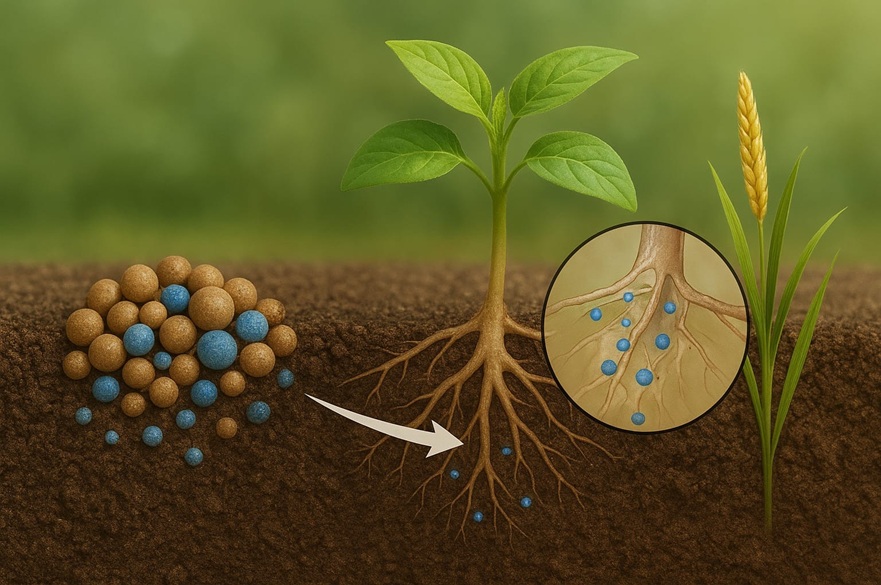
It will involve incorporating nanotechnology-enhanced formulations to plant feed, allowing targeted and increased absorption of essential nutrients directly into plant roots and through the leaves.
This ‘precision agriculture’ approach is expected to result in increased yields, reduced harvest times, and prevent against pests, as well as reducing reliance on imported chemicals often used in less effective traditional fertilisers.
The work will involve embedding advanced nanotechnology expertise initially developed at Nottingham Trent University for the pharmaceutical industry into commercially viable plant feed and will benefit UK commercial agriculture and horticulture sectors.
It is thought to be the first time commercially accessible plant biostimulant has been produced using bespoke nanotechnology that has the capacity to correct trace mineral deficiencies as a way of improving both crop productivity and nutrition.
The project will also address two major environmental challenges in modern agriculture by minimising fertiliser waste and reducing environmental runoff containing possible pollutants.
In turn this will also help improve the farmers’ profitability with a reduced cost of treatment to achieve the yield increases required to maintain commercial viability.
Nano-minerals will be synthesized and new fortified plant feed will be formulated in both powder and liquid form before a series of plant performance trials across the UK.
“This work will tackle general inefficiencies inherent in traditional fertilisers and will benefit both farmers and gardeners,” said principal investigator Gareth Cave, Professor in Advanced nanotechnology and sustainable chemistry in Nottingham Trent University’s School of Science and Technology.
He said: “Our technology can help drive agricultural productivity and resilience by accelerating crop growth and yield, strengthening plant defences against environmental pressures, and reducing vulnerability to pests.
“This precision-targeted approach to nutrient delivery will ensure controlled release directly to plant roots, optimising absorption while preventing excess leaching into ecosystems.
“The result is healthier soil, reduced environmental impact and a shift towards more sustainable farming practices.”
Tom Mawhood, Director of Micromix Plant Health, said: “We are excited to commence work with Gareth and his team both to develop new products but also to improve the effectiveness of our existing products.
“Farmers face considerable financial and practical challenges and we anticipate that these enhanced nano-products will materially improve quality, yield and profitability.
“There are already some interesting developments we are pursuing for each of cereal crops, oilseeds, potatoes and sugar beet.”
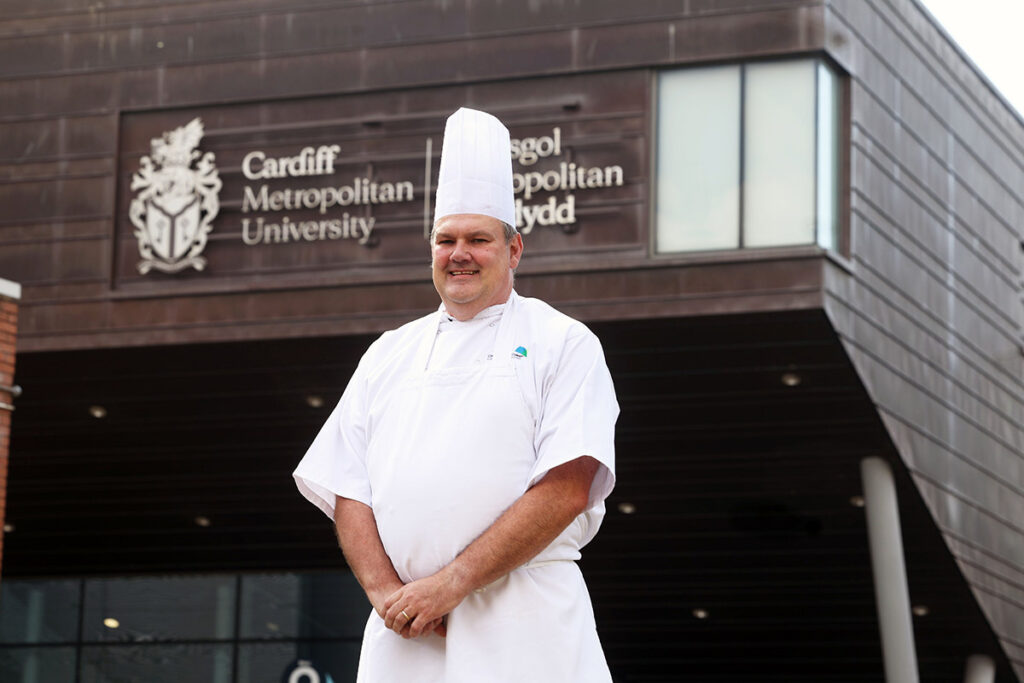
Chef Michael Cook, who studied for a Master’s Degree in International Tourism and Hospitality at Cardiff Metropolitan University, has been recognised with the Life Change Award in this year’s Inspire! Adult Learning Awards.
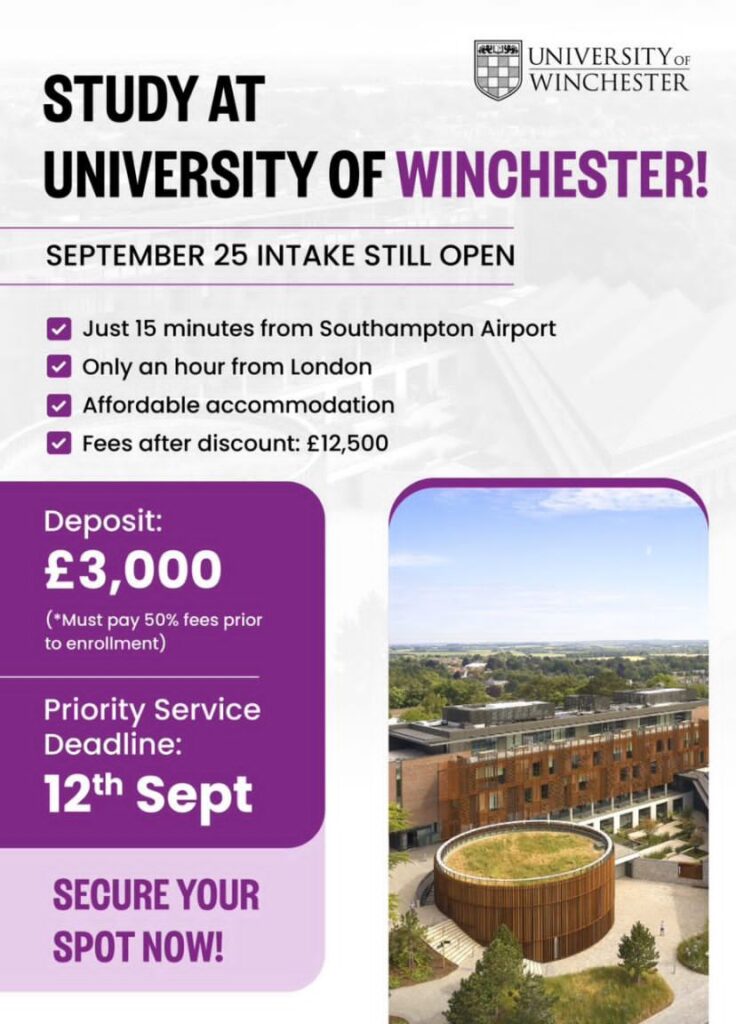
Are you looking for a UK university with affordable tuition, excellent facilities, and a welcoming environment? The University of Winchester is still accepting applications for its September 2025 intake – and this could be your chance to study in one of England’s most student-friendly cities.
NTU has received the University Mental Health Charter (UMHC) Award – in recognition of the commitment towards continuous improvement in the area of mental health and wellbeing.
Created by Student Minds, the UK’s student mental health charity, the UMHC Award Panel Assessment team commended NTU on its “strong working relationship with local NHS services, and the excellent work of the Student Voice Committee”.
It also recognised NTU’s staff training, the ongoing inclusion of students in change processes and the variety of checklists and frameworks in place to support the University community.
Steve Denton, Vice-Chancellor at Nottingham Trent University said: “I am delighted that our extensive mental health and wellbeing support for our students and staff has been recognised through the award of the Mental Health Charter. I am particularly pleased that Student Minds acknowledged the close collaboration and engagement with our students and our NHS partners in the design and delivery of mental health and wellbeing support.”
NTU first started on the path to achieve a UMHC Award back in 2021 and was one of the first members to join the programme. It is still only part of the third cohort to seek out and qualify for an UMHC Award.
Following the recent success of the Netflix drama, Adolescence, Masculinities Scholar and Senior Lecturer at Cardiff Metropolitan University, Dr Ashley Morgan discusses masculine toxicity.
Ashley said: “The rise of the ‘manosphere’ in the 2020s marked a significant cultural shift. What began as fringe online forums has evolved into a widespread network of influencers, podcasts and social media personalities promoting hyper-masculine ideals, often under the guise of self-improvement or so-called ‘male empowerment’.
“As these narratives gain traction among impressionable young audiences, particularly boys and adolescents, the lines between confidence and aggression, mentorship and manipulation, have become increasingly blurred. This raises urgent questions about the impact of digital culture on male identity and emotional development.”
What is masculine toxicity? Is it new? What are the signs? Was Adolescence a catalyst for conversation and reminder of society’s responsibility to protect young boys from harmful online content?
Cardiff Metropolitan University’s Head Coach of Women’s Rugby, Lisa Newton, has been crowned British Universities and Colleges Sport (BUCS) Coach of the Year after a season that redefined excellence within the University’s rugby programme.
Under Newton’s leadership, the Cardiff Met women’s team surged to victory in the BUCS Women’s Super Rugby Championship, securing the coveted title of national champions. Her player-centred approach has also guided several squad members into the international arena, with several students winning caps for their country – underscoring her ability to nurture talent for the highest levels of the game.
Beyond match day triumphs, Newton is known for her commitment to athlete welfare and education. She has been instrumental in advancing understanding of women’s health across Cardiff Met Sport, ensuring players receive holistic support both on and off the field.
Michael Peacock, Head of Performance Services at Cardiff Met, praised Newton’s impact, saying: “Lisa exemplifies what high-level coaching and leadership should look like; driven, empathetic, and deeply committed to the development of the whole athlete.
“She has demonstrated genuine humility and vulnerability in her development of both herself and the environment. Her ability to lead with both excellence and care has been transformational for our women’s rugby programme and the wider performance environment at Cardiff Met.”
Lisa Newton’s influence now extends well beyond silverware – she is shaping a stronger, more empowered rugby community at Cardiff Metropolitan University, one that will continue to inspire future generations of athletes.
A mature student has achieved first-class honours at Cardiff Metropolitan University and secured national recognition as an ’Undergraduate of the Year’ finalist.
Warren Abraham, 52, made the decision to retrain as a teacher following the death of his wife during the Covid-19 pandemic, having previously worked as a teaching assistant. Determined to build a new future for himself and his young son, he enrolled at Cardiff Met and quickly stood out for his academic strength and resilience.
Throughout his time at Cardiff Met, Warren immersed himself in opportunities to develop professionally and connect with peers, including mentoring younger students. As a mature student with real-world experience, he became a positive role model within Cardiff School of Education and Social Policy – earning the nickname of ‘Dad’ among his cohort.
He was also recognised in the highly competitive Undergraduate of the Year Awards, where he was shortlisted from over 5,000 applicants across the UK in the ‘career changer’ category. The Undergraduate of the Year Awards is run by Target Jobs and rewards the best students in the UK.
The Career Changer award celebrates individuals who have made significant shifts in their careers and demonstrated excellence and determination in the face of challenges. As part of the finalist event, Warren had the opportunity to meet other shortlisted students and public figures, including Jamie Laing of Made in Chelsea.
As part of his final year at the University, Warren won a first-class grade for his final project exploring the experiences of left-handed children in education. Drawing from his own observations and personal interests, he investigated the often-overlooked challenges that left-handed pupils face in classroom environments predominantly designed for right-handed learners.
Warren credits his academic success to the support of his late wife’s family, who have played an essential role in helping him raise his son. Their help with childcare and tuition finance allowed him the time and peace of mind to focus on his studies.
Now preparing to enter the classroom as a fully qualified teacher, Warren is particularly drawn to working with upper Key Stage 2, year groups he finds both challenging and deeply rewarding. He explained: “With older pupils – especially in Years 4, 5, and 6 – you really have to earn their engagement. They’re beginning to form their own ideas and test boundaries, so building that connection takes effort, but that challenge is what makes it so rewarding. I’m excited by the opportunity to make a lasting impact at such a crucial stage, just as they’re preparing for the big leap to secondary school. It’s a pivotal time in their lives, and I want to be someone who helps them navigate it with confidence.”
Crossing the Wales Millennium Centre stage at Cardiff Met’s graduation ceremony in July, Warren looks forward to being joined by his son and parents-in-law for the big day.
A mature student who was diagnosed with dyslexia during her degree and overcame a number of personal setbacks is graduating from Cardiff Metropolitan University this week.
Having worked as a hairdresser since leaving school at 16, Kelly Bichard, from Barry, went back to university in 2021 to study BSc (Hons) Human Nutrition and Dietetics at Cardiff Met after some personal health conditions inspired her to change career.
Kelly, now 44, said: “At the age of 30, I underwent a hysterectomy. It was during this time and after visiting a private nutritionist to see what I could do to make my own lifestyle healthier, that I became really interested in working in healthcare. I wanted to be able to give something back and make a difference.”
During her second year of university and at the age of 42, Kelly was diagnosed with dyslexia – a learning difficulty that can cause problems with reading, writing and spelling.
“My dyslexia was never picked up at school and I never noticed it as I managed to do well in my GCSEs – I think I found coping strategies on my own. It wasn’t until I came to university that I noticed I was different to other people on my course. I would procrastinate on coursework, try to start the work but be unable to get the words down on paper, and everything seemed to take me so much longer.
“It felt like a relief to be diagnosed with dyslexia. I have had so much support from student services at Cardiff Met who arranged for an in-person test to place which took around two hours and consisted of a number of small tests which then confirmed my diagnoses. The test was also funded by the University. I now have some great coping strategies that I didn’t have before – there is so much support available.”
Kelly was also forced to take a break from the degree in her final year in 2024 and is graduating a year later than planned, due to ill health in her family affecting her anxiety, returning in 2025 to complete the final semester of her course.
Ali Birrane, Lecturer in Nutrition and Dietetics at Cardiff Metropolitan University, said: “Kelly has been a joy to teach. Her hard work, dedication and persistence to complete the course, despite having multiple challenges, and obstacles to overcome throughout the degree are testament to her character.”
Kelly says she is now keen to find a hospital-based role and credits the three clinical placements during her degree for helping her to decide to secure a role in an acute environment.
Kelly added: “I have really enjoyed the course. And the clinical placements have been a great way to experience a real case load in a hospital and get a good understanding of what life in the profession will be like once you graduate. By the end of the clinical placements, you feel a real sense of responsibility.
“To other students thinking of going back to university, or who may be wondering if they can do it – I would say that you can. Even though certain parts can be stressful, there is great support available, and anyone can do it if you really put you mind to it!”
A new report reveals how internet memes have become powerful tools in the global fight against information disorder during the war in Ukraine.
The Complex Web in Memetic Warfare, by Nottingham Trent University (NTU) in the UK and Aarhus University in Denmark, explores the role of the North Atlantic Fella Organization (NAFO) – a grassroots online movement using humour, satire, and visual storytelling as a form of civic resistance.
NAFO emerged in May 2022 as a volunteer-driven network supporting Ukraine, with members signalling their belonging with the use of a Shiba Inu avatar. Operating primarily online and without central leadership, NAFO has grown into a global movement – engaging thousands of individuals worldwide in what members describe as “digital volunteering.”
Their activities include countering Russian propaganda, fact-checking misinformation, reporting online accounts and posts, fundraising, and boosting public morale through memes.
The report, funded by the British Academy and Leverhulme Trust, draws on a global study which featured a survey of 255 NAFO and affiliated participants, 39 in-depth interviews, and extensive digital content analysis.
Findings show that memes are not just for entertainment, but are being used to shape public conversation, mobilise international support, and challenge disinformation. NAFO’s use of humour has proven especially effective in reaching disengaged audiences, raising awareness about false information through coordinated actions, and flipping the dynamics of online debate.
Participants also reported improved digital literacy, becoming more skilled at identifying false narratives and navigating complex online environments.
The research also looked at the motivations of the group members for engaging in political warfare, finding that it lay deeply rooted in personal values, emotional responses, and a shared commitment to civic resistance. Members also described feeling anger, frustration, and helplessness after Russia’s invasion and, for many, NAFO offered a tangible way to channel these feelings into meaningful action.
For many Ukrainians, seeing meme-based support from around the world provides emotional and psychological reassurance, reinforcing a sense of global solidarity.
work using texting cell phone typing computer.chatting on mobile,laptop contact us at workplace Thinking investment plan Investor.searching information internet.connecting people concept
However, the report also highlights ethical concerns around the use of graphic imagery. While some participants believe such content is necessary to expose the realities of war, others view it as potentially harmful. Despite differing views, there is a shared understanding of the need for a moral code in digital activism.
“Russia has weaponised memes as part of a broader strategy of offensive information warfare – using troll farms, state-controlled media, and AI-generated content to spread false and misleading information as part of their strategy to sow confusion,” explained Dr Tine Munk, lead researcher and Senior Lecturer in Criminology at NTU’s School of Social Sciences.
“In contrast, Ukraine has embraced humour as a defensive tool. The government, civil society, and online influencers use memes to reach wider audiences, lift public morale, and discredit Russian propaganda by making it appear absurd and untrustworthy.”
Dr Ian Mahoney, co-author and NTU Senior Lecturer in Criminology, added: “NAFO’s community efforts blur the lines between activism, advocacy, and online subculture. Memes are becoming a form of soft power in warfare – no longer fleeting internet jokes, but tools with real-world consequences and political impact.”
To better understand and respond to the growing influence of memes in shaping public opinion, researchers and governments are encouraged to invest in tools that can trace how memes spread and influence audiences.
The report recommends further exploration of how memes can be used as positive forces in digital activism, especially in conflict and war zones where information is often distorted. NAFO’s success in using memes to support democratic values and counter disinformation highlights the potential of such strategies to engage the public and reduce political apathy. Governments can learn from this to better connect with citizens and promote civic participation.
The report also calls for stronger media literacy efforts and clearer ethical guidelines for using memes, especially as AI-generated content becomes harder to detect. Social media platforms should improve content moderation by combining AI tools with professional oversight and user reporting systems. Features like content blurring, autoplay controls, and graphic content filters should be strengthened to give users more control and reduce harm.
Ultimately, a coordinated approach involving researchers, governments, platforms, and civil society is recommended to ensure memes are used responsibly and effectively in the digital age.