NEWS

Study captures rare glimpse into urban hedgehog life – and reveals the impact of feeding on garden visits

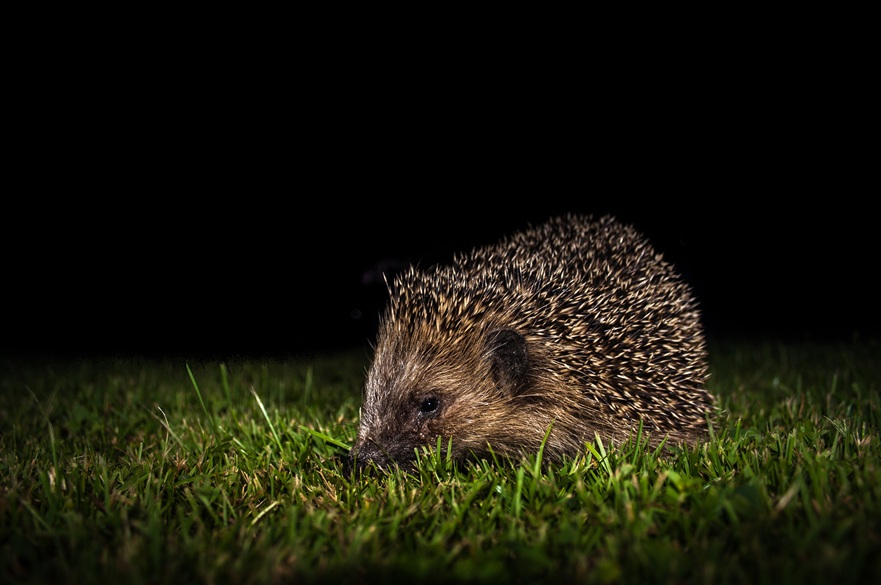
A large-scale motion sensor camera project has revealed the hidden results of feeding hedgehogs – and it may have a bigger impact than previously thought.

Researchers at Nottingham Trent University and Chester Zoo analysed thousands of  images from 415 gardens, alongside each garden’s specific characteristics, to examine how often hedgehogs were detected and which features most influenced their visits.

Hedgehogs were present in more than half (57%) of the gardens studied, demonstrating that these spaces are crucial habitats for them..

The study in residential gardens across Cheshire, was part of Chester Zoo’s Hedgehog Watch scheme and is thought to be one of the UK’s largest trail camera studies for a single species.

Hedgehogs are a species of conservation concern across Europe with long-term population declines due to factors such as loss of habitat and increased vehicle collisions.

The researchers believe urban habitats are increasingly important for hedgehogs and that unlocking insights into how they use gardens could play a key role in their conservation.

Food was by far the most important factor for their presence, with the spiky mammals appearing in 78% of gardens that supplied hedgehog food and 53% of gardens where bird food was left on the ground. Hedgehog presence dropped to fewer than half of gardens (46%) when no food was left out.

Just over a quarter (28%) of all the gardens surveyed contained food left out for hedgehogs.

Lead researcher Kelly Hitchcock, a PhD student in Nottingham Trent University’s School of Animal, Rural and Environmental Sciences, and one of Chester Zoo’s Conservation Scholars, warned that the practice of feeding wildlife needs further study as it can lead to significant and unanticipated changes to animal behaviour and health.

She said: “The provision of supplementary food clearly plays a significant role in shaping hedgehog movement and distribution. Despite the possible benefits of supplementary feeding, it can pose potential risks such as increased disease transmission among animals, altered hibernation behaviour, increased aggression between species and changes in species community structure.”

The study also revealed that hedgehogs were 70% more likely to be spotted in gardens where foxes had been detected, possibly due to increased food availability.

Kelly said: “We saw some of this on the cameras, which captured images of foxes and hedgehogs sharing food bowls, despite the fact that hedgehogs can be a prey species for foxes. The potential impacts of supplementary feeding certainly warrant further investigation in future research.”

While the authors anticipated that the presence of food would be important, it was so dominant that it made other variables such as the presence of flower beds, vegetable patches, overgrown areas, or ponds, less significant within the data.

The researchers argue, however, that while their work sheds important light on how hedgehogs are using urban gardens, people should continue to include wildlife-friendly features on their land as hedgehogs and other species will benefit from them.

“Our data will contribute to further studies, including one looking at hedgehogs, foxes and badgers. There is more research needed, and public participation has huge potential to help us understand how UK wildlife and people coexist within a changing world,” said Kelly.

Leah Williams, Lead Conservation Scientist in Population Biology at Chester Zoo, said: “This was a fascinating and ambitious project. It is generally difficult for scientists to access private gardens to gather camera trap footage. One of the largest camera trap studies of its kind in the UK, it yielded an incredible sample size and captured amazing snapshots of garden wildlife.

“It was a hugely collaborative project and would not have been possible without the volunteers who allowed cameras into their gardens. We know many were surprised to find that their gardens host hedgehogs, which are nocturnal, and we like to think this was a nice way for the participants to feel more connected to species living just beyond their doorstep.”

Bonington Gallery presents A Semester in Nottingham 1976 by John Dean

Bonington Gallery presents A Semester in Nottingham, 1976, an exhibition of photographs by American photographer and videographer John Dean.

In the Spring of 1976, Dean was a 20 year old visiting student from the Maryland Institute College of Art, taking part in an exchange programme with Trent Polytechnic (now Nottingham Trent University). During his short visit, he created a powerful body of work that captures Nottingham during a year of profound social and economic change.

Armed with a camera and quiet curiosity, Dean immersed himself in the rhythms of Nottingham life. Over the course of a single semester, he wandered the city’s streets and parks — Hyson Green, Market Square, the Arboretum — capturing striking black-and-white portraits of residents going about their daily lives. The resulting images are both documentary and deeply personal, offering an intimate glimpse into the lives of Nottingham residents during this transformative era.

The exhibition marks a significant homecoming to the institution where Dean studied fifty years ago. Now, half a century on, these photographs will be exhibited in the UK for the first time, in the city where they were made.

First developed in Trent’s own darkrooms (still situated next door to Bonington Gallery, in the School of Art & Design), these photographs have remained largely unseen for decades. Now, they return to the place of their origin, standing as a testament to the power of observational storytelling, told through the eyes of a visitor to the city.

John Dean has since built a distinguished career as a producer and videographer, creating historical and educational media for museums and non-profit organisations across the United States. Yet photography remains his first and most enduring creative language — a medium through which he continues to explore the intersections of memory, environment, and human experience.

John Dean is a Baltimore-based photographer, videographer who graduated with a BFA from the Maryland Institute College of Art.

He regularly works with museums, non-profit organisations and editorial platforms on the creation of educational and historical media and content. In addition to his institutional work, John’s independent photographic practice has taken him around the world, exploring historic and cultural sites, including excavation sites in Greece and sacred spaces in Istanbul.

Current work includes photography for the 111 Places Guides, a series of books published by Emons Verlag.

John worked on 111 Places in Baltimore That You Must Not Miss and 111 Places in Washington DC That You Must Not Miss. As a mentor and arts advocate, John is consistently guided by a curiosity for human stories.

John Dean
A Semester in Nottingham, 1976

21 March – 9 May 2026
Launch: Friday 20 March 2026, 6-8pm

Pioneering Welsh initiative to tackle underrepresentation in cardiovascular research

On St Dwynwen’s Day, as Wales celebrates love and compassion, the National Cardiovascular Research Network (NCRN) is calling on communities to help protect the most vital symbol of love – the heart.

The NCRN is an interdisciplinary network of academics, researchers, clinicians, NHS staff, patients, charities and health boards united with the mission to drive cutting-edge cardiovascular research across Wales.

Based in Cardiff Metropolitan and Swansea universities, and spanning universities across Wales, the NCRN has been set up with funding from strategic partners, Health and Care Research Wales and the British Heart Foundation.

Currently, 340,000 people are living with heart disease in Wales, and 9,700 of them will die from the condition every year, according to the British Heart Foundation.

It is a huge public health issue, and certain groups – like ethnic minority communities, women, people living in rural or deprived areas, young people and adults in care settings – are often not taken into account within research that can help prevent, diagnose and treat heart disease.

Statistics from BHF Cymru show that many risk factors for cardiovascular disease (CVD) are more prevalent in Wales’ most deprived areas, including smoking, obesity, insufficient levels of physical activity, eating fewer than five fruits and vegetables daily, and hazardous alcohol consumption. This undoubtedly contributes to higher cardiovascular morbidity and mortality in Wales’ most deprived populations.

But behind every statistic is a family, a loved one, a story.

That’s why the NCRN has launched AURORA (Addressing Underrepresentation through Outreach and Research Access), a new initiative to eliminate inequalities in heart and circulatory health across Wales.

The grant scheme, supported by Health and Care Research Wales and British Heart Foundation, is dedicated to supporting community-based outreach and public engagement activities that make cardiovascular research more inclusive.

By funding community projects, AURORA helps build stronger relationships between research and the people it impacts the most to ensure every voice is represented in the science that shapes a healthier future for all.

Anyone can apply for AURORA, as long as they have a good idea of how to make heart health more inclusive across Wales – for example, setting up blood pressure drop-in clinics in community centres or care homes, paying for a mobile cardiovascular health service for those experiencing homelessness or educational/awareness sessions in schools.

Professor Barry McDonnell, Chair of the AURORA funding committee and Director of the NCRN, said of the initiative: “Our vision is to use this funding to build real purposeful partnerships with traditionally underrepresented communities across Wales. This funding will pay for groups to lead or engage in cardiovascular initiatives, making a real impact towards improving inclusivity of cardiovascular research within our communities.”

Hassan Al-Kaabi, Health Systems Insight Manager at British Heart Foundation (BHF) Cymru said: “I believe AURORA matters as it gives a platform to people who are too often unheard in cardiovascular research. When communities with less voice are left out, the science we rely on becomes incomplete, and so do the solutions. By supporting locally led, culturally grounded outreach, we can build trust, open doors and ensures that those most affected by cardiovascular disease can shape the research that shapes their future. For BHF Cymru, this is not just good practice, but it’s a meaningful step towards a fairer, more representative future for heart health for the people of Wales.”

More information on AURORA can be found on the National Cardiovascular Research Network website.

Cardiff Met athletes confirmed for Milano Cortina 2026 Winter Olympics

Huge congratulations to three Cardiff Met alumni who are heading to the 2026 Winter Olympic Games in Milan Cortina (6 to 22 February).

They follow in the footsteps of many former Archers to compete on the world’s biggest stage and represent an amazing achievement for our University community.

Adele Nicoll

Former Cardiff Met student, staff member and coach Adele Nicoll has been highlighted by Team GB as one of their athletes to watch at the upcoming Games.

Nicoll, a three-time British shot put champion, took up bobsleigh in 2020 and now makes her Olympic debut as a bobsleigh pilot in both the monobob and two-woman events, becoming the first British female to compete at a Winter Olympics in monobob

Her place on Team GB’s core sliding squad comes after competing as a reserve in Beijing 2022 and achieving strong results on the World Cup and European Cup circuits.

Adele studied Clinical Neuroscience at Cardiff Met and was awarded a Doctorate in Clinical Psychology in 2023.

Leon Greenwood

Congratulations also to Leon Greenwood, a BSc Sport and Physical Education graduate who represented Cardiff Met as both a sprinter and basketball athlete during his time studying at Cardiff Met from 2015-2018.

Leon joined the British Bobsleigh programme in 2022 and has since earned medals at World and European Championships.

He has now been selected for Team GB’s four-man bobsleigh crew, marking his first Olympic Games appearance.

Mica Moore

Our third Olympian is former women’s sprinter Mica Moore, who has been selected to represent Jamaica in bobsleigh at her second Winter Olympics, competing in the women’s monobob.

Mica, who studied BSc Education and Sport and MSc Sport Broadcasting at Cardiff Met and still trains at the National Indoor Athletics Centre, previously represented Great Britain in the two-women bobsleigh event at the 2018 Winter Olympics in South Korea.

Her selection is a powerful reminder that sporting excellence crosses borders and disciplines.

Mica recently recorded a video about her Olympic hopes, filmed and edited by one of Joe Towns’ Sport Broadcast MSc students, Devin Pote.

We’ll be cheering on Adele, Leon and Mica as they compete on the world’s biggest winter sports stage. Good luck/pob lwc to all three.

Nottingham Trent University’s Knowledge Exchange Framework results

We have recently received our results of the annual Knowledge Exchange Framework (KEF), an initiative introduced by Research England.

Similar to the Research Excellence Framework (REF) and the Teaching Excellence Framework (TEF), the KEF is also a measurement that we use to benchmark and track our activities and performance – in this case within knowledge exchange.

Simply put, knowledge exchange is our work with external partners such as businesses and organisations of all sizes to share our knowledge and expertise for the benefit of the community and economy.

The KEF measures seven perspectives of knowledge exchange, namely:

  • Research partnerships
  • Working with business
  • Working with the public and third sector
  • Skills, enterprise and entrepreneurship
  • Local growth and regeneration
  • Intellectual Property (IP) and commercialisation; and
  • Public and community engagement

The metrics used are based on income, and in the case of Public and community engagement and Local growth and regeneration – a self-assessment submission. To aid benchmarking and performance, institutions are clustered together with comparable universities.

This year we are encouraged to report that once again, our results remain consistent and expected amongst our competitor universities. We remain average or above average engagement for the majority of the above perspectives.

Our ranking slightly increased in the Research Partnerships element but dipped slightly for Working with Business. This seems to be mainly due to movements in the wider sector affecting the benchmark as our activity remains fairly stable.

We will use these results to track and improve our performance in these areas, to ensure we remain accountable and continue to play an important role in our community. It also helps to showcase the excellent work we are doing at a national level, and in the future, may be used by Research England to inform its approach to funding.

Professor Sarah Speight
Deputy Vice-Chancellor and Provost
Nottingham Trent University

University Compare names UEA in top 25 for employability

UEA has been named in the top 25 of University Compare’s ‘Best universities for employability 2026’ rankings.  

The employability rankings consider how universities help students get ready for life after graduation – whether through placement years, industry connections or career support. It also uses the views of alumni who have shared their experiences in securing employment after graduation, and the support they received from their university after leaving. 

University Compare ranks UK universities using a methodology that blends qualitative and quantitative data, primarily sourced from verified student reviews and official datasets.  

Each university is assessed across five key categories: accommodation, course quality, student social life, employability, and recommendation likelihood. Students rate these areas on a scale of one to five, and their responses are aggregated to form an overall score.  

To ensure reliability, reviews must meet minimum character requirements, originate from unique IP addresses, and pass CAPTCHA verification. The platform uses a trust-weighting system where the value of a university’s score increases with the number of reviews it receives, meaning institutions with more reviews are given greater credibility in the rankings.  

UEA received nearly 300 reviews for this year’s ranking.  

In addition to student reviews, University Compare incorporates data from the Higher Education Statistics Agency (HESA) and the Key Information Set (KIS). These datasets provide insights into graduate outcomes, future career alignment, and research quality. 

This approach ensures that the rankings reflect both the lived experiences of students and objective performance indicators, offering a comprehensive view of university quality. 

Nottingham Trent University and Sherwood Forest Hospitals NHS Foundation Trust Sign Landmark Memorandum of Understanding

Nottingham Trent University (NTU) and Sherwood Forest Hospitals NHS Foundation Trust (SFHT) have signed a Memorandum of Understanding (MoU) to formalise a strategic partnership aimed at enhancing healthcare education, research, and innovation across Nottinghamshire and the wider region.

The MoU sets out a shared commitment to collaborate across key areas including clinical and non-clinical placements, workforce development and digital transformation. The partnership will focus on improving the health and wellbeing of local communities while supporting the recruitment, education, and retention of high-quality healthcare professionals.

Initial areas of focus include expanding placement opportunities for NTU students, developing joint research initiatives, and creating pathways for employment and education in both clinical and non-clinical roles.

Steve Denton, Vice-Chancellor and President of Nottingham Trent University, said:

“This partnership reflects our shared ambition to make a meaningful impact on the health and wellbeing of our communities. By combining NTU’s academic excellence with the clinical expertise of Sherwood Forest Hospitals, we are creating new opportunities for students, staff, and the wider population. Together, we will drive innovation, support workforce development, and strengthen the civic role of both institutions.”

Dr David Selwyn, Acting Chief Executive at Sherwood Forest Hospitals NHS Foundation Trust, said:

“Sherwood Forest Hospitals is committed to improving lives across the communities we serve and this partnership with Nottingham Trent University is another brilliant example of how we work with other local organisations to do just that.

“This exciting partnership will help our local hospitals to explore research and innovation opportunities with our local education providers, helping our local NHS to access the cutting-edge facilities and thinking that our universities have to offer.

“Crucially, this commitment will also create more opportunities for local people to step into the NHS to learn and work locally – helping to meet the needs of our local communities, both now and for many years to come.”

The commitment builds on the institutions’ individual partnerships with West Nottinghamshire College. The partnership will also extend to the University, College and Trust working together to design university healthcare courses that will prepare local people for working in the local health and care sector.

Nano approach to plant feed will improve crop productivity, farm profitability and sustainability

Cutting-edge nanotechnology will drive a new generation of fertilisers aimed at addressing UK food security by improving the nutritional value, performance and health of crops and plants.

Scientists at Nottingham Trent University are working with the company Micromix Plant Health as part of the three-year knowledge transfer partnership, being funded by Innovate UK.

It will involve incorporating nanotechnology-enhanced formulations to plant feed, allowing targeted and increased absorption of essential nutrients directly into plant roots and through the leaves.

This ‘precision agriculture’ approach is expected to result in increased yields, reduced harvest times, and prevent against pests, as well as reducing reliance on imported chemicals often used in less effective traditional fertilisers.

The work will involve embedding advanced nanotechnology expertise initially developed at Nottingham Trent University for the pharmaceutical industry into commercially viable plant feed and will benefit UK commercial agriculture and horticulture sectors.

It is thought to be the first time commercially accessible plant biostimulant has been produced using bespoke nanotechnology that has the capacity to correct trace mineral deficiencies as a way of improving both crop productivity and nutrition.

The project will also address two major environmental challenges in modern agriculture by minimising fertiliser waste and reducing environmental runoff containing possible pollutants.

In turn this will also help improve the farmers’ profitability with a reduced cost of treatment to achieve the yield increases required to maintain commercial viability.

Nano-minerals will be synthesized and new fortified plant feed will be formulated in both powder and liquid form before a series of plant performance trials across the UK.

“This work will tackle general inefficiencies inherent in traditional fertilisers and will benefit both farmers and gardeners,” said principal investigator Gareth Cave, Professor in Advanced nanotechnology and sustainable chemistry in Nottingham Trent University’s School of Science and Technology.

He said: “Our technology can help drive agricultural productivity and resilience by accelerating crop growth and yield, strengthening plant defences against environmental pressures, and reducing vulnerability to pests.

“This precision-targeted approach to nutrient delivery will ensure controlled release directly to plant roots, optimising absorption while preventing excess leaching into ecosystems.

“The result is healthier soil, reduced environmental impact and a shift towards more sustainable farming practices.”  

Tom Mawhood, Director of Micromix Plant Health, said: “We are excited to commence work with Gareth and his team both to develop new products but also to improve the effectiveness of our existing products.

“Farmers face considerable financial and practical challenges and we anticipate that these enhanced nano-products will materially improve quality, yield and profitability.

“There are already some interesting developments we are pursuing for each of cereal crops, oilseeds, potatoes and sugar beet.”

Dyslexic chef returns to education to become a lecturer and win an Inspire! award

Chef Michael Cook, who studied for a Master’s Degree in International Tourism and Hospitality at Cardiff Metropolitan University, has been recognised with the Life Change Award in this year’s Inspire! Adult Learning Awards.

Study in the UK – Apply Now for the University of Winchester September 2025 Intake

Are you looking for a UK university with affordable tuition, excellent facilities, and a welcoming environment? The University of Winchester is still accepting applications for its September 2025 intake – and this could be your chance to study in one of England’s most student-friendly cities.