Archives for DTHomes

Embedding AI and smart technologies in green spaces to enhance physical and mental health and wellbeing

A new project will seek to introduce cutting-edge AI and smart technologies to green spaces across the UK, helping to redefine how people engage which nature while enhancing visitors’ wellbeing.

Nottingham Trent University has received almost £600,000 from the UKRI Engineering and Physical Sciences Research Council to lead the work, which will create inclusive, tech-augmented spaces that aim to improve physical and mental health.

The initiative is part of a wider ‘Engineering Healthier Environments’ project and will involve establishing a ‘GREEN+ Network’ to drive it forward and establish a roadmap for how new technologies can be integrated into public landscapes to promote healthier, more connected lives.

The project, in collaboration with the University of Edinburgh, will bring together academics, healthcare professionals, greenspace managers, technologists and community organisations.

It will involve investigating and incorporating nature-based interventions across environments such as parks, forests, zoos, adventure parks, botanic gardens and community green spaces.

Low cost and inclusive

The partners argue that a key aim will be to reimagine these green spaces not as static parks, but as interactive, intelligent ecosystems.

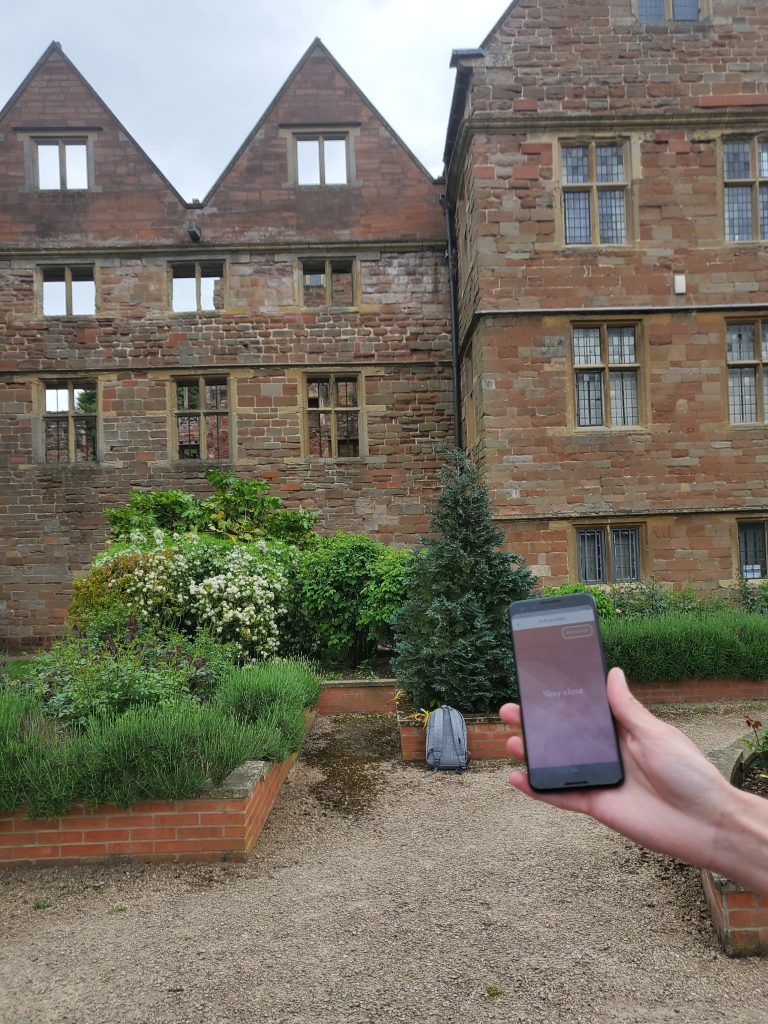
The team at NTU previously developed the ‘TagWithMe’ project, a smart wellbeing platform for green spaces which challenges visitors to identify tagged smart objects in different locations through a mobile app that delivered real-time challenges, quizzes and prompts.

It is hoped that, in promoting physical and mental wellbeing, the work will help to support social prescribing and strengthen community connectedness.

Partners will co-lead pilot projects, workshops and other events exploring how pervasive technologies can help to support health and wellbeing in natural settings, and feasibility projects will be co-designed with potential users.

Ideas developed through the network will be low-cost, inclusive and designed to work within communities across the UK.

The team wants to harness the existing value of green spaces and the role of nature in lowering blood pressure, reducing anxiety and depression, improving cardiovascular health and enhancing creativity.

The aim is not to replace nature with technology, but to enhance the benefits people already gain from being outdoors by layering in subtle, supportive interventions.

“These are spaces people already trust, already love and are freely accessible – they are woven into daily life yet often overlooked as platforms for innovation,” said network director Eiman Kanjo, Professor in Tiny Machine Leaning and Pervasive Computing and Head of the Smart Sensing Lab in Nottingham Trent University’s School of Science and Technology.

Bridging the digital divide

The technologies developed will be broad and inclusive, benefitting older adults looking to stay active, young people engaged by gaming and exploring, people with mental or physical health conditions, and those in areas where access to healthcare or community resources is limited.

Experiences will range from imaginative and playful to clinically impactful and low-cost wearables and offline-friendly tools will help bridge the digital divide, ensuring no one is excluded for lack of devices or data plans.

Visitors could follow digital wellbeing trails, for instance, where AI-generated prompts encourage breathing exercises or gentle stretches, or smart sensors embedded in benches or pathways might offer live feedback on movement patterns and encouragement to keep walking.

Apps could suggest new areas to explore based on mood or health goals, using AI to personalise each visit.

And in locations such as zoos or botanic gardens, families might engage with augmented storytelling experiences, where children unlock educational content about biodiversity by interacting with tagged objects or responding to challenges.

Meanwhile, people recovering from mental health challenges might find nature-based prompts supporting mindfulness, resilience and grounding techniques tailored to their condition.

“Our work will harness AI systems, pervasive sensing and low-energy digital technologies, embedding them into our green spaces as a way to encourage movement and support physical and mental wellbeing,” said Professor Kanjo.

“AI systems and smart infrastructure are reshaping how we engage with our surroundings. Through this bold interdisciplinary collaboration we hope to transform these spaces into responsive, data-informed hubs for healthier living.”

Enjoyable, empowering and evidence-based

It is considered important timing the project as the technological landscape has shifted dramatically – with the rise of energy-efficient microcomputing, edge AI and non-invasive biosensors – alongside an urgent health and societal need.

“Sedentary lifestyles continue to fuel a crisis in chronic disease and mental health concerns are at an all-time high,” added Professor Kanjo.

“Social fragmentation, exacerbated by the COVID-19 pandemic, has left many people isolated, disconnected from their communities and the natural world.

“This work helps to answer all of these challenges at once, inviting people back outside, back into movement, back into connection, through experiences that are enjoyable, empowering and evidence-based.

“It’s about finding new ways to move, breathe, play and connect – not by escaping into a screen, but by engaging more deeply with the world around us. It’s about seeing technology not as something separate from nature, but as something that, when designed with care and purpose, can help us rediscover it.”

The team hopes that individuals will experience improved physical health through increased activity, reduced stress through mindfulness and engagement and a greater sense of purpose and connection.

And at the community level green spaces will become hubs for social interaction and public health outreach, reducing pressure of traditional service and fostering more resilient neighbourhoods.

For healthcare systems, meanwhile, the project offers new avenues for preventive care and data-driven support, and for policymakers, it is hoped to be a blueprint for how digital innovation can enhance public assets in equitable, sustainable ways.

Professor Kanjo added: “Importantly, the design process will be co-led by users themselves, with healthcare professionals, social prescribers and community groups shaping every stage of development.

“Through workshops, and funded pilot projects, we will continuously generate new ideas and partnerships, feeding back into a growing network of sites and stakeholders.”

Kia Nazarpour, Professor of Digital Health, School of Informatics, at The University of Edinburgh, said: “I am excited to join forces with Professor Kanjo to build the GREEN+ network community. The research at the intersection of health, care, and physical activity stands to benefit from this coordinated effort to address critical challenges in movement, rehabilitation, and mental health and wellbeing.

“Together, we can unlock equitable, scalable AI-enabled solutions to promote lifelong physical activity.”

Green space managers, industry innovators and healthcare professionals interested in being involved are invited to contact eiman.kanjo@ntu.ac.uk.

Cardiff Met Coaches and Students Selected for Welsh Universities Hockey Squad

Cardiff Metropolitan University is once again proudly represented in the Welsh Universities Hockey programme, with both staff and students playing key roles in the women’s squad ahead of this summer’s Nations Cup fixtures against England Universities. The representative teams, a long-standing tradition in Welsh student sport, bring together top players from institutions across Wales, offering a unique and memorable experience of international-level competition.

Following a competitive trial process, including sessions held before and after Cardiff Met students’ participation in the EuroHockey Club Challenge I in Antalya, Turkey, 13 Cardiff Met representatives have been selected, including 11 players and 2 coaching staff. Student-athletes named in the squad are: Ella Bradley, Jamie Bulbring, Lucy Crompton, Casey Hillidge, Molly Hulcup, Amelia Lavington, Hannah McShane, Izzy Ricoux, Pip Venner, Tegan Waters, and Megan Watts, who will also serve as Vice Captain.

The coaching team includes Cardiff Met staff members Alf Dinnie (Head Coach and Lecturer in Performance Analysis for Cardiff Met School of Sport and Health Sciences, Dave Robinson and Sam Webster (Assistant Coaches).

“It’s a real honour to be invited back to lead the Welsh Universities Women’s Hockey squad,” said Head Coach Alf Dinnie. “This programme is a special opportunity for student-athletes to represent their universities and country with pride. We’ve got a talented and motivated group coming together, and I’m looking forward to building on the momentum from last year when we were the only Welsh team to defeat England, coming out on top in a dramatic shootout after a hard-fought 2–2 draw.”

Last year, Cardiff Met had 16 players and staff involved across the men’s and women’s hockey squads. The university looks forward to supporting the current cohort as they proudly represent Wales on the university sports stage again this summer.

The 2024 Nations Cup will once again be contested over two legs. The Away fixture will take place at Nottingham Hockey Centre on Saturday 21st June, with the Home leg hosted in Cardiff at Llanrumney Sports Fields on Thursday 26th June. Additional friendly fixtures are being to support final preparations.

Cardiff Met continues to lead the way in developing elite student-athletes and staff contributing to representative sport at the highest level.

Cardiff Met Men’s Cricket Team Crowned BUCS National Trophy Champions

Cardiff Metropolitan University’s men’s cricket team have been crowned BUCS National Trophy Champions after a thrilling victory over local rivals Cardiff University in the final held in Newport on Wednesday.

In a closely contested match, Cardiff Met sealed the win by 4 wickets, demonstrating resilience and team spirit to bring home their second national title in three years, a huge achievement for the university’s cricket programme and a proud moment for the team.

The BUCS National Trophy win reflects the strength and growth of Cardiff Met’s cricketing provision, which sits at the heart of one of the most comprehensive university cricket programmes in the UK. Cardiff Met is home to the Cardiff University Centre of Cricketing Excellence (UCCE), one of only five such centres across the UK. Delivered in partnership with Cardiff University, the University of South Wales (USW), and Glamorgan County Cricket Club, the Centre provides a high-performance environment for student athletes to develop their cricket alongside their academic studies.

The Cardiff Met BUCS cricket programme is one of the largest university cricket programmes in the UK for both men and women, and represents the university’s biggest single sporting provision. With 11 current players or recent graduates securing professional contracts across the UK in the past two years, the programme provides a strong development pathway for talent at every level.

Gethin Smart, Cardiff Met’s Cricket Programme Manager and Sport Development & Workforce Manager, said: “This is an outstanding achievement by a group of committed, hard-working student athletes. The BUCS National Trophy win is a testament to the quality of our cricket programme and to the strength of our partnerships across the region. To beat strong opposition like Cardiff University in a final makes it even more special. The players have shown real character throughout the competition, and I’m proud of how they’ve performed to such a high standard all season.”

The team will now look to build on this momentum as they continue to develop some of the UK’s most promising university cricketers, combining elite sport with academic excellence.

Leicestershire’s universities invite local residents with life and skills experiences to apply for community-focused research projects

The University of Leicester, De Montfort University and Loughborough University are inviting people from the local community to apply for paid, full-time PhD, and part-time Placement research projects that aim to improve the lives of communities across Leicester, Leicestershire and Rutland.

The Collaboratory programme is an eight-year ambitious project that commenced in 2022, initially as part of the Universities for Nottingham Civic Agreement before bringing in the three Leicestershire universities – along with the Leicestershire Universities Partnership Civic Agreement into the fold from April this year.

The Programme aims to bring together academia and the community to support growth and development within communities, broaden prospects, drive change, and improve wellbeing.

The research projects have been created to solve real-life problems in the community, designed following input from researchers and those involved in local civic and community organisations.

Applications are open now, and the project team is looking for individuals, particularly those with a professional or community-centred background; those with experience and passion for creating positive change in the community are invited to apply. Successful PhD applicants will undertake a paid, three-year period of research on the fully funded Doctoral Training Programme, resulting in a PhD qualification. Successful Research Placement applicants will undertake a paid, part-time period of research, over 10 weeks, resulting a formal Certificate of Recognition.

Professor Richard Thomas, Pro Vice Chancellor Research and Enterprise at the University of Leicester, said: “I would urge anybody with a passion to create positive change in our local community to apply for these PhD and placement projects. We’d particularly like to hear from researchers from non-traditional backgrounds who would like to develop their academic skills”.

Professor Mike Kagioglou, Deputy Vice-Chancellor Planning, Research and Innovation at De Montfort University said: “At De Montfort University, we are deeply embedded in the heart of Leicester and committed to ensuring that our research reflects and responds to the needs of our communities. Collaboratory is an exciting opportunity to bring new talent into the research landscape — people with real lived experience and a passion for making a difference. 

“These projects are about working with communities to tackle challenges that matter to them. We’re proud to be part of a project that breaks down barriers and redefines what research excellence can look like, and we’re really looking forward to seeing applications from people who want to create lasting, positive change.”

Professor Emily Keightley, Associate Pro Vice-Chancellor for Vibrant and Inclusive Communities at Loughborough University, said: “We’re delighted to be working with our Collaboratory partners to drive a new community-centred approach to doctoral research. These newly-launched PhD projects are an exciting opportunity to create meaningful change for the people of Leicestershire and Rutland”.

The PhD projects that are available explore challenges such as:

  • Understanding the factors that influence children’s financial literacy skills in Coalville
  • Energy for All: Spreading the benefits and broadening engagement in community energy projects in Leicester, Leicestershire and Rutland
  • The role of community-centred organisations and social enterprises in addressing “invisible” local poverty.
  • Rethinking models and policies for first and last mile travel – connecting rural areas beyond city boundaries.
  • Transformative and innovative strategies for improving social support, educational outcomes and opportunities for children, young people and families in Leicester
  • Identifying nurse perspectives in suicide safety planning and risk management for children and adolescents in Leicester.
  • Inclusive Heritage in Superdiverse Places: Redesigning inclusion in heritage content, practice, and policy in Leicestershire

Applications close on Sunday 29 June 2025.

Anyone interested in applying is welcome to attend an information webinar which will introduce the Collaboratory programme, provide an overview of the research projects, how to apply and what the expectations are. Full details can be found on the Collaboratory website.

Device uses psychology to help neurodivergent people with everyday tasks

People who are neurodivergent could benefit from a new device created by a Nottingham Trent University (NTU) undergraduate which uses psychology to help them complete day to day tasks.

Lia Kamenova, 22, created the ‘Buddy Double’ to help people, like her, who struggle with procrastination and executive dysfunction.

She was inspired by her own experiences and those of her partner, Matthew Wroe, 22, who is autistic, and spotted a gap in the market for young neurodivergent adults.

Her design aims to replicate the supportive effects of body doubling – a strategy widely recognised within the neurodiverse community as one that aids task initiation, enhances focus, and reduces overwhelm.

This approach is particularly helpful for individuals with executive functioning challenges, such as autistic people and those with ADHD.

Research shows that people with ADHD  may experience challenges with self-regulation when working alone. The presence of another person (a ‘body double’) can offer a sense of shared focus, accountability, and external structure, which can support task engagement.

“My partner and many of my immediate circle of friends are neurodivergent – we all struggle with executive dysfunction, although in different ways,”  said Lia, originally from Plovdiv in Bulgaria, who is studying BA Product Design in the School of Architecture, Design and the Built Environment.

“Many people find everyday tasks unexpectedly difficult – especially when managing executive functioning challenges, where even the simple routines can feel overwhelming.

“You don’t have to be neurodivergent to struggle with this – anyone can find care tasks overwhelming, especially during times of stress and exhaustion. It’s completely valid to struggle – and that’s exactly where Buddy can help.

“I wanted to create something that makes everyday tasks feel lighter, eases the pressure and brings friendliness through playfulness. For me, this project is about showing how play can make daily life feel more doable and joyful.”

The Buddy Double is a  palm-sized, friendly digital companion. Its design draws on Gen Z’s affection for technology, nostalgia, and all things cute – echoing the charm of iconic toys such as the Furby and Tamagotchi.

A flexible stem on top of its head wags back and forth in response to voice-activated commands, mimicking a dog’s tail to create a sense of warmth and encouragement.

It can be programmed with a user’s daily care tasks and can provide reminders through visual and auditory cues such as movement and beeping. When it’s time to complete a task, it grabs the user’s attention by wagging its stem and making a small noise after which it displays an animation relevant to the activity, such as a ‘thirsty face’ when it’s time to drink water.

Once a task is completed, the user can track their progress via the accompanying app,  unlocking digital rewards called ‘Buddy Bucks’ which they can exchange in-app to customise their Buddy Double’s facial features.

The aim is to incentivize people to use the physical device rather than just the app, encouraging engagement without relying on a smartphone.

“We use our phones for everything – organising, connecting, even coping – but constant engagement can be exhausting. Buddy Double offers a playful way to stay on track without screens, gently easing phone dependence and encouraging more mindful, less overwhelming daily routines.”

The device connects to smart devices via Bluetooth and responds to its name, which can be set by the user.

Made with a hard acrylic outer casing and a soft silicone stem, it is designed to be customizable and users can personalise their Buddy Double with interchangeable stems and fabric costumes to truly make it their own.

The device features three task modes suited to different needs:

  • Finite Tasking: For short, fixed-time tasks like brushing teeth, which are checked off automatically in the app – this can help users with working memory difficulties remember their routine or completed tasks
  • Timed Tasking: Ideal for users who struggle with time blindness, it provides a visual countdown using its moving stem
  • Infinite Tasking: For open-ended activities such as washing dishes, users verbally start and end tasks with ‘Buddy’, let’s wash dishes together’ and ‘Okay Buddy, all done.’ This mode allows users to task for as long as they can, which can improve motivation by letting the user tap out of the task when needed, not necessitating completion.

Lia’s design is set to go on show for the 2025 NTU Student Showcase, which is one of the largest displays of graduating art and design talent in the UK.

Max Pownall, course leader of BA Product Design at NTU, said: “Lia has taken her personal experiences used them to create a product which could benefit thousands of people who are neurodivergent.

“She has created a unique product which harnesses the benefits of cognitive behavioural therapy to help improve people’s lives by empowering them to overcome low motivation and enhance their productivity.”

Cardiff Met students selected for Wales Training Squad ahead of Australia tour

Two Cardiff Metropolitan University students have been selected in the Wales Women’s Rugby training squad ahead of Wales’ summer tour to Australia and the 2025 Rugby World Cup in England.

Sport, Physical Education and Health student Savannah Picton-Powell earned her call-up following standout Player of the Match performances in both the semi-final and final of Cardiff Met Women’s BUCS Super Rugby championship victory in April. She is joined in the Wales training squad by teammate and fellow student Lucy Isaac, a Sport Conditioning, Rehabilitation and Massage student.

Also named in the wider training squad are four players from Cardiff Met’s Welsh Rugby Union Player Development Centre (PDC East) team: Chiara Pearce, Isla McMullen, Seren Lockwood, and Tilly Vucaj.

The PDC at Cardiff Met plays a vital role in the Welsh Rugby Union’s national strategy to develop high-potential female players and strengthen the pathway to international rugby. In their ambition to be Wales’ Sporting University, Cardiff Met is proud to partner with the WRU to provide a professional training environment for emerging talent, led by Cardiff Met staff member and Welsh rugby legend, Elinor Snowsill.

Lisa Newton, Women’s Head Rugby Coach at Cardiff Met, said, “We’re incredibly proud to see our current students representing Wales on the international stage, and we hope they make a strong impact in Australia ahead of the World Cup later this year. It’s also fantastic to see our PDC players, some as young as under 18, earning recognition, which reflects both the depth of talent in Wales and the high-performance environment we offer at Cardiff Met. Through access to elite coaching, physiotherapy, athlete lifestyle and education support, rehabilitation services, and our state-of-the-art Archers Performance Centre gym, we are committed to developing players and preparing them for the demands of professional and international rugby.”

Wales face the Wallaroos in a two Test series, beginning on 26 July in Brisbane before the second international on 1 August in Sydney.

Pioneering RNA nanotherapy offers hope for inflammatory bowel disease patients

Researchers at Nottingham Trent University are involved in a study to develop a new type of treatment for inflammatory bowel disease (IBD), a condition affecting over five million people worldwide.

The photo of large intestine is on the man’s body against gray background, People With Stomach ache problem concept, Male anatomy

Together with University of Nottingham and University College London they received £1.3 million from the Medical Research Council (MRC).

Current IBD therapies often fail to fully relieve symptoms for many patients, especially those also suffering from serious gut infections like Clostridioides difficile, which can worsen inflammation and lead to more severe outcomes.

The team is harnessing the power of microRNAs—tiny molecules that help regulate the immune system—by packaging them into microscopic particles called nanoparticles.

These are designed to deliver treatment directly to damaged parts of the gut, reducing inflammation and protecting cells. Early results in lab models have been very promising, showing targeted action with no signs of harm.

Now entering a critical development stage, the project brings together a cross-disciplinary team of experts from leading UK institutions.

These include Dr Christos Polytarchou, Dr Maria Hatziapostolou, Dr Sarah Kuehne and Professor Lesley Hoyles at NTU, Dr Tanya Monaghan, Professor Cameron Alexander and Dr David Scurr at the University of Nottingham, Dr Pratik Gurnani at University College London, Professor Roisin Owens at the University of Cambridge, Dr Anna Seekatz at Clemson University, USA.

The team will refine and test these therapies in cutting-edge systems that mimic the human gut, while also exploring the potential to treat other conditions, such as inflammatory conditions of the gut-brain axis and neurodegenerative diseases.

If successful, this groundbreaking technology could lead to a new generation of personalised treatments, offering real hope to IBD patients who do not respond to current therapies.

Dr Tanya Monaghan, Associate Professor in the School of Medicine at the University of Nottingham, and project lead, said: “We urgently need more targeted and effective treatments for people living with inflammatory bowel disease and more severe forms of C. difficile infection.

“This project takes us a step closer to personalised therapies that can not only reduce inflammation but also help repair and protect the gut. I’m excited about the potential impact this could have for patients who currently have limited options.”

Dr Christos Polytarchou, Associate Professor in Health and Disease in Nottingham Trent University’s School of Science and Technology, said: “This collaboration brings together world-class expertise to push the boundaries of RNA-based therapies.

“Our goal is to develop precision nanomedicines that not only treat inflammation more effectively, but also address the underlying molecular drivers of disease. It’s a unique opportunity to translate pioneering science into real clinical solutions.”

Rewriting the rules for menswear – new wearable skirts for men

Katie with a model posing in one of her skirts

Rewriting the rules for menswear – new wearable skirts for men

Fashion student Katie Cooper is turning menswear on its head with a collection of wearable skirts which challenge gender norms.

Inspired by historical fashion, the 21-year-old created a range of clothes which would pave the way for men to once again feel comfortable wearing skirts.

“Originally, skirts were made for men – many powerful figures were seen wearing them in Ancient Egypt and all the way up to the Renaissance,” said Katie, who is studying BA Fashion Design in the Nottingham School of Art & Design.

“But over time, fashion changed and masculinity was channelled through the tailored suit, and now men distance themselves from anything that could be seen as feminine.

“So I wanted to offer a small step forward and show men that skirts can be strong, wearable, and part of everyday fashion again.”

Katie’s catwalk collection blends historical references with modern craftsmanship.

Pleats are hand-sewn, drawing inspiration from the classic kilt, and silhouettes are designed to challenge perception without sacrificing practicality.

Her catwalk collection includes three outfits which comprise skirts, baggy shorts with a skirt silhouette, or trousers which resemble long skirts:

– Look One: A long, kilt-inspired skirt made from deadstock Harris Tweed – mimicking traditional tartan. It is paired with a deconstructed pinstripe suit jacket, missing one sleeve and asymmetrical in cut, designed to question traditional notions of masculinity and power

– Look Two: Oversized, baggy trousers with side pleats – giving the silhouette a skirt-like appearance. Paired with a shirt inspired by 19th-century pilgrim collars (a feminine detail at the time) and a detachable hood, the outfit blends streetwear with historical nuance

– Look Three: Pleated jorts – baggy denim or tweed shorts that visually echo the silhouette of a skirt

Katie interviewed men from different backgrounds and found that many heterosexual men expressed they would “never wear a skirt” due to social stigma, while LGBTQ+ participants were more open to the idea.

“It was fascinating to see how deeply these gender rules are ingrained,” she said. “So my garments are aimed at younger men, especially in bigger cities, who seem more open to experimenting and pushing those boundaries.

“I don’t want my designs to be extravagant for the sake of it. They’re made to be worn, cherished, and lived in – pieces that stay in your wardrobe for years, not just for one statement moment.”

Katie’s designs are on public exhibition for the 2025 NTU Graduate Festival. The show is one of the largest exhibitions of graduating art and design talent in the UK.

Emma Prince, course leader for BA Fashion Design at NTU, said: “Katie’s designs show how fashion can challenge societal norms while remaining completely wearable and gender appropriate.

“Her collection is bold and well-crafted, showing a strong understanding of historical context, sustainable practice and innovative approaches to menswear.”

Local community invited to Cardiff Met’s annual Art & Design Community Day

Cardiff Metropolitan University’s School of Art and Design will open its doors to the public for its popular annual Community Day on Sunday 15 June 2025

A range of activities will be available, giving the public the chance to try out skills taught at the School. Highlights include an animation workshop, neurographic art classes – which combine creativity and psychology to support stress reduction and wellbeing – and postcard printing sessions.

The Community Day is open from 12pm to 4pm at Cardiff Met’s Llandaff campus, with free workshops running until 3.30pm. There is no requirement to book in advance.

Activities are suitable for anyone over the age of eight , and all children must be accompanied by an adult. The free workshops available include:

  • Stop motion animation workshop: Get an introduction to Dragon Frame stop-motion software and the animation principles of timing and movement using everything from Lego, plasticine and found objects to create animation.
  • Neurographic art: A meditative practice combining creativity and psychology to reduce stress and support emotional wellbeing.
  • Cosmic watercolour animals: A fun and relaxed workshop creating a vibrant cosmic animal using wet-in-wet watercolour washes.
  • Screen printing postcards: Visit the print studio and experience screen printing a postcard sized image that you can keep as a memento.
  • Fabric, heat transfer press workshop: Using paper cut outs see fabric come to life on a product, before taking a one-of-a-kind swatch away.
  • Exploring your facial expressions: Using emotional state software, this activity will show how expressions are used to understand consumer behaviour, user experience and social interaction.
  • PEL’s immersive research: Ever wondered how your eyes reveal your decision-making? Try on a pair of eye-tracking glasses which will help uncover how you process information and make choices.
  • Riso poster printing: Have a go at making a two colour, A3 riso poster. Cardiff Met tutors show the process of risograph printmaking and get the chance to make a quick drawing or collage.

Screenings will also air from the School’s photography studio all day, so the public can watch a screening of original animations, videos and multimedia artworks from the University’s graduating art and design cohort.

Dr Bethan Gordon, Dean of Cardiff Metropolitan University’s School of Art and Design, said: “Our annual Community Day is a great opportunity to welcome the University’s neighbours and wider community to take part in a range of activities, get creative and even learn a new skill using some of our fantastic facilities.

“Part of the Cardiff School of Art and Design Summer Show, those attending the community day will also get the chance to see some of the exceptional work produced by our students.”

Students will also be showcasing their work within the Cardiff School of Art and Design Summer Show between Friday 13 June – Friday 20 June 2024. It is free to visit, and the general public are welcome to attend during the following opening hours:

  • Weekdays: 10am – 6pm
  • Weekends: 12pm – 4pm

Tours of the School’s facilities will also run throughout the day – giving attendees a glimpse behind the scenes at how students produce their work and a walk through the Summer Show exhibition to view the finished products.

More information on the Cardiff School of Art & Design Degree Show 2025 is available on Cardiff Met’s webpage.

Equestrian wear for wheelchair users inspired by family friend

Wheelchair users will be able to ride horses with increased comfort and a sense of belonging thanks to pioneering designs by a fashion student who was inspired by the experience of a family friend.

Daisy Brace, 21, wanted to make equestrian wear more inclusive after her mother’s friend felt disconnected from her love of horse riding after an accident left her paralyzed from the waist down.

Although horse riding for her mother’s friend remained possible, Daisy wanted to help her regain a sense of belonging to the horse riding community, so she created an equestrian wear outfit which is designed to accommodate a wheelchair user’s needs.

“Her love of horses never went away,” said Daisy, from Moorhouse, Nottinghamshire, who is a lifelong horse rider herself and an undergraduate student at Nottingham Trent University (NTU).

“Even after her injury, she wanted to continue riding and I realised there was very little on the market that was both functional and fashionable for people in her situation – especially when it came to equestrian clothing. I wanted to change that.”

Daisy dedicated her final year fashion design project to the cause and undertook research into adaptive clothing and incorporated the lived experiences of her mother’s friend.

Her designs include:

  • A lightweight Harris Tweed double-breasted jacket which has back and forearm panels that are quilted with upcycled saddle cloth wool to provide comfort and support in a seated position. The design incorporates an arched back to reduce bulk when sitting in a wheelchair, and has magnetic fastenings and a ribbon tie on the inside for ease of use
  • A breathable pure cotton shirt has a specially lowered neckline, which reduces fabric bulking up when seated. It features open arm seams to assist wearers with limited mobility, and an adjustable gathered waist to accommodate body changes over time
  • A multifunctional bag designed to attach to various parts of a wheelchair, provides practical storage solutions for essentials like keys, gloves, and phones without adding bulk to pockets
Models posing in Daisy’s designs
Picture credit: Iwan Cromack

Daisy, who is studying in the Nottingham School of Art & Design, said: “My mum’s friend has been incredibly encouraging and gave me honest advice that I couldn’t have found online.

“From understanding how uncomfortable wheelchairs can be over long periods, to why accessible fashion often lacks personality – these are the things that guided my work.”

While saddles and other riding equipment for para-athletes are often adapted, Daisy saw a gap in the market for contemporary heritage riding wear that supports both physical needs and emotional wellbeing.

“There’s a limit to what’s out there – everything feels purely functional,” she said. “After an injury, you’re not only adapting physically but also redefining your identity. I wanted to bring personality and positivity back into clothing for disabled riders.

“Clothes should help people feel part of a community. For horse riders, it’s more than a hobby – it’s a way of life. Your disability shouldn’t define you, and your clothes shouldn’t limit you.”

Daisy’s designs are on public display for the 2025 Graduate Festival. The show – which takes place at the University’s City Campus – is one of the largest displays of graduating art and design talent in the country.

Krystyna Kolowska, senior lecturer in Fashion Design at NTU, said: “Daisy has spotted a gap in the market for wheelchair users who have a love of horse riding but are let down by a lack of inclusive designs that are made available to them.

“Her designs are very thoughtful and take into consideration the functional and emotional needs of people who, like anyone else, require clothing which allows them to pursue their interests whilst allowing them to feel good.”